
Kourou
Kourou, 2002 and 2004. Two satellites photographed weeks before launch, an Ariane 5 at its pad, and a CD-ROM that explained a whole launch campaign.
In October 2002 CNES, the French space agency, sent our camera to the Guiana Space Centre in Kourou. Frédéric Swierczynski, my old friend from the Lycée Gustave Eiffel and the man who lit the Lascaux II replica for us, went with it. I ran the production from France with the Doo Interactive team.
In four days Fred photographed two spacecraft weeks away from launch, Stentor and Rosetta, and an Ariane 5 at its launch pad. Within two months one of those satellites was gone, and the other had lost its comet. In 2004 we went back for CNES with a different brief: explain a whole launch campaign, from the arrival of the rocket stages by sea to lift-off.
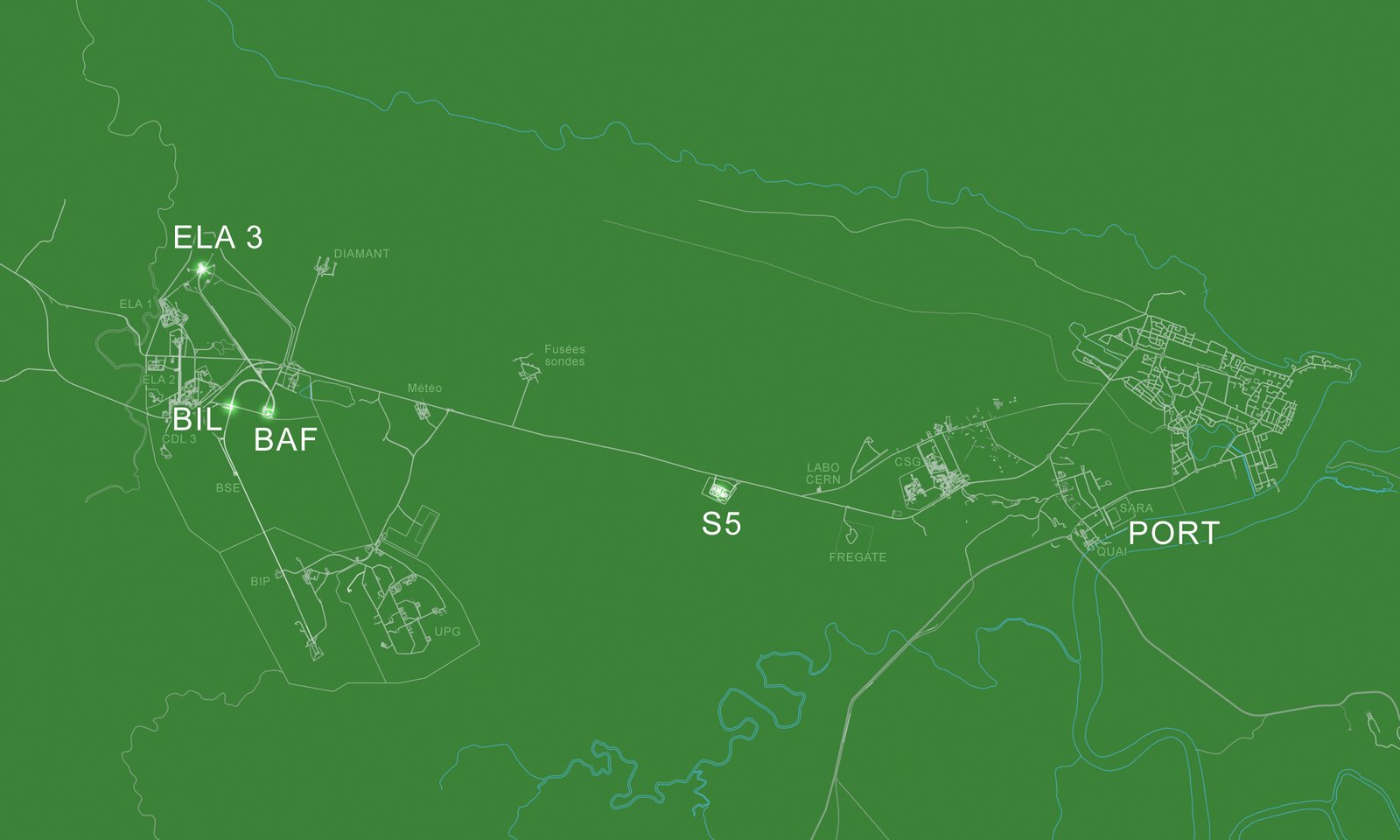
Europe's spaceport, five degrees from the equator
France chose Kourou in 1964 and the first rocket left in 1968. The site sits about 500 km north of the equator, where the Earth’s rotation gives a rocket a free push towards geostationary orbit, with open ocean to the east for anything that falls back. CNES runs the base, the European Space Agency owns the launch facilities and Arianespace operates the launches.
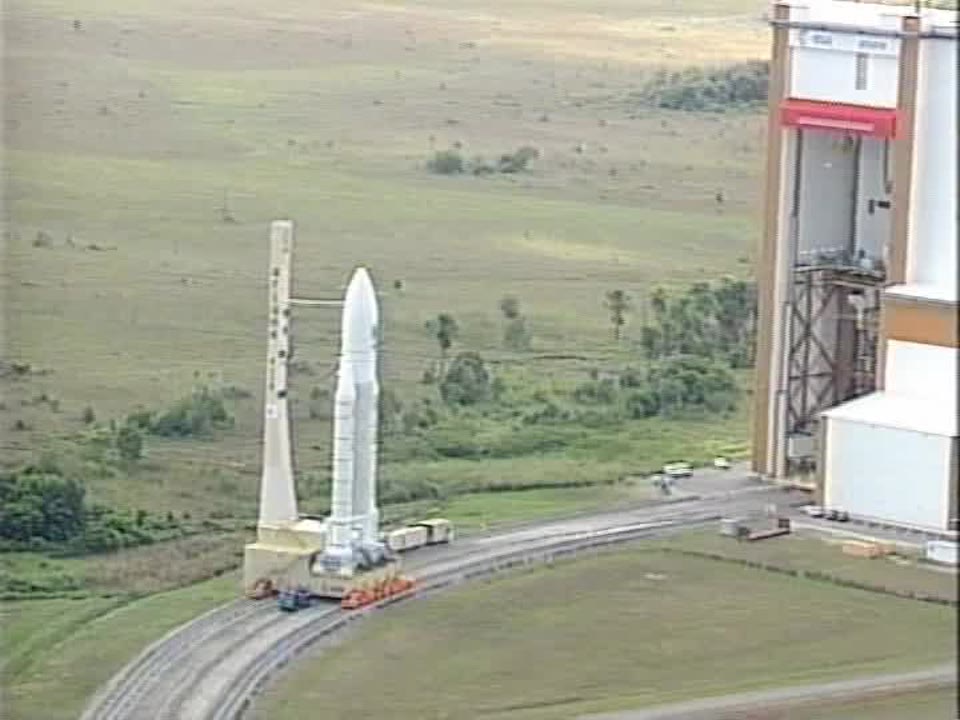
Ariane 5 flew from its own complex, ELA-3, from 1996 to 2023. A launch there is a chain of buildings: the stages are assembled in the launcher integration building (BIL), satellites are prepared in clean rooms such as S5, payload and rocket meet in the final assembly building (BAF), and the launcher rolls out to the pad while the Jupiter control room runs the count.
Stentor, the satellite that never flew
Stentor was a French experimental telecommunications satellite: a test bed for the technologies of the next generation of telecom satellites, built by Alcatel Space on a Spacebus 3000B3 platform for CNES, France Télécom and the French defence procurement agency. It was due to fly on the first Ariane 5 ECA, the new heavy version of the launcher.
Fred spent hours in its clean room, among the gold foil and the technicians in gowns and caps, shooting 360° views and flat pictures as the satellite was turned and prepared. We ended up with 43 validated views.
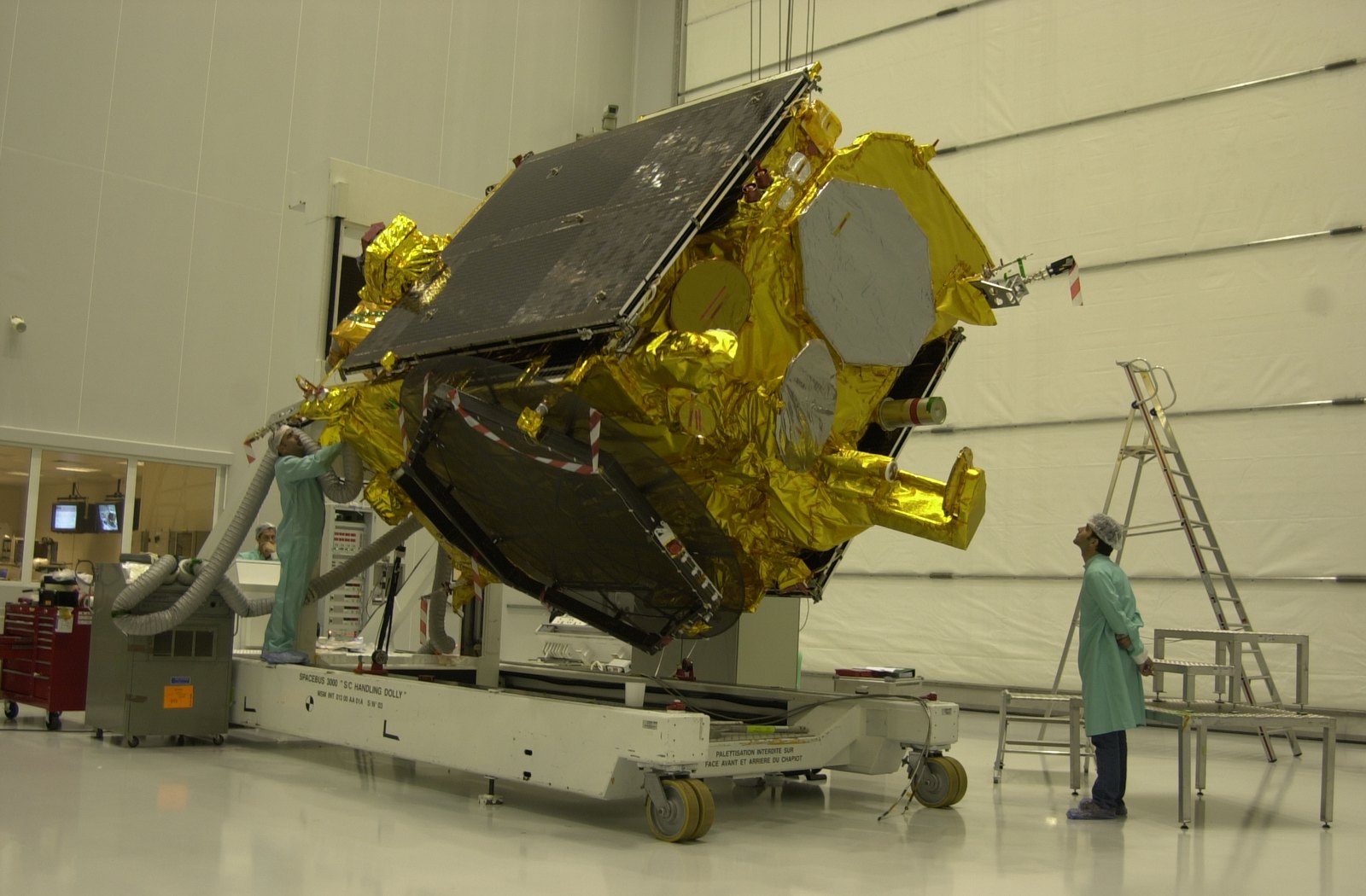
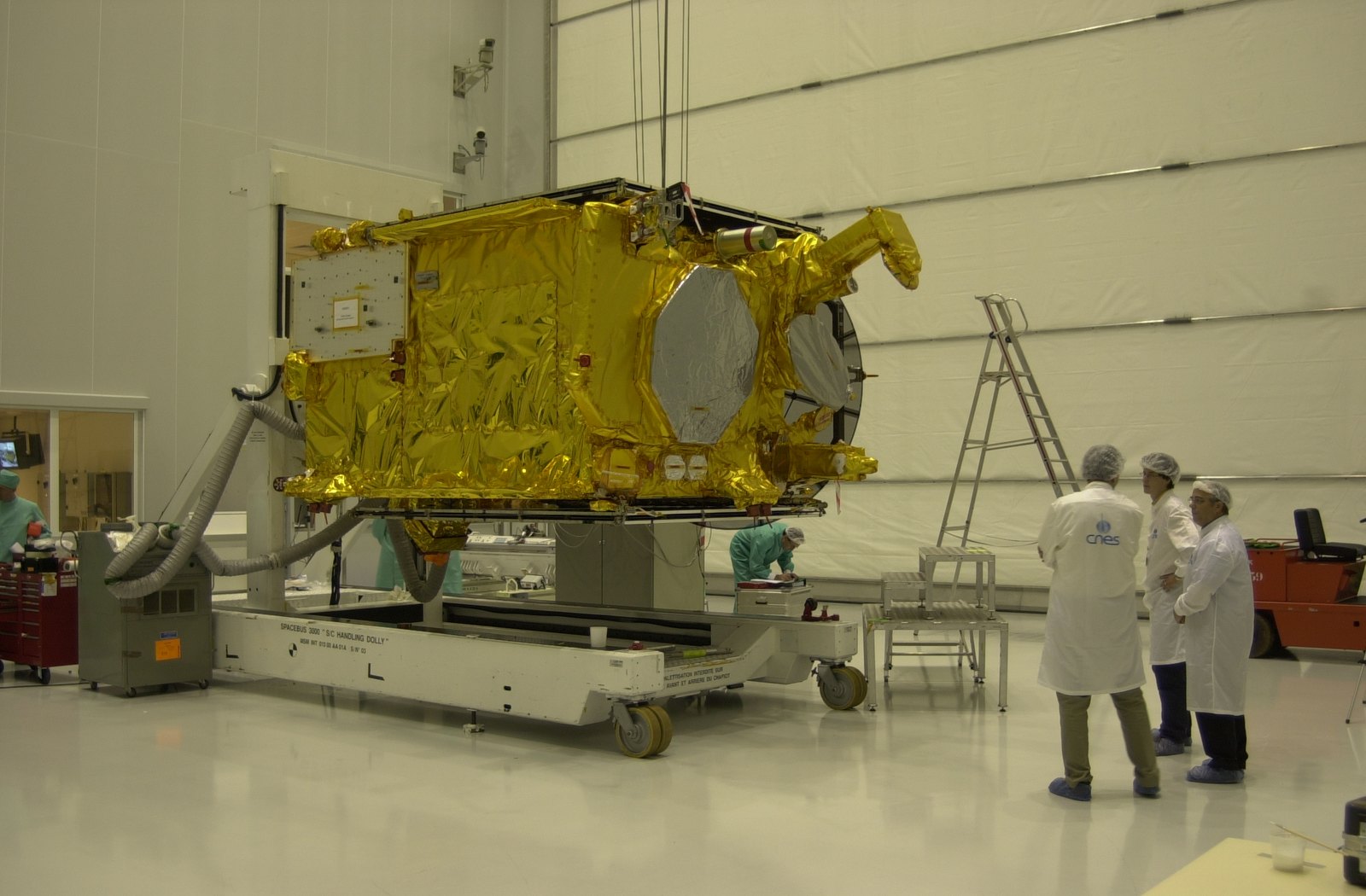
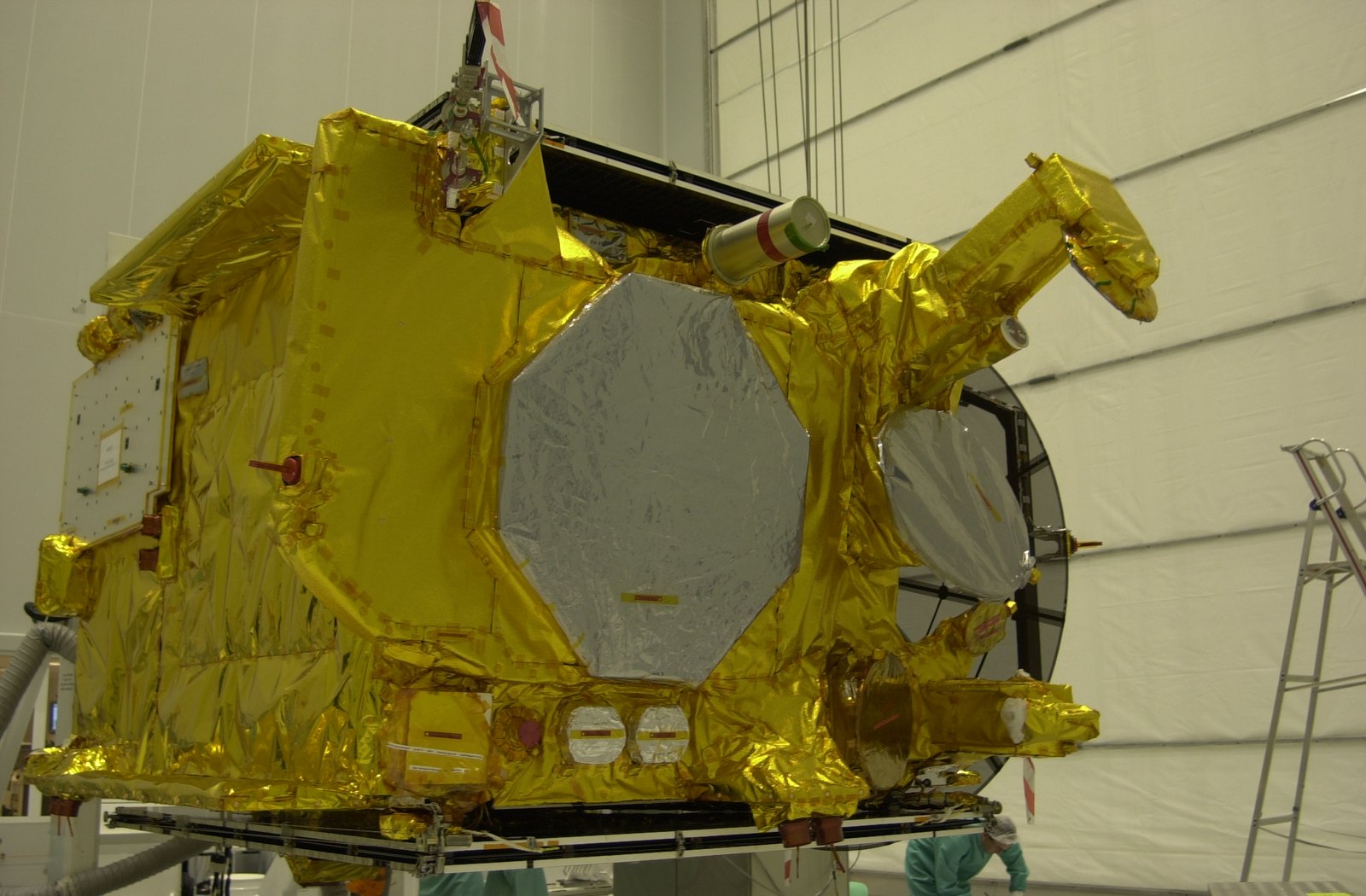
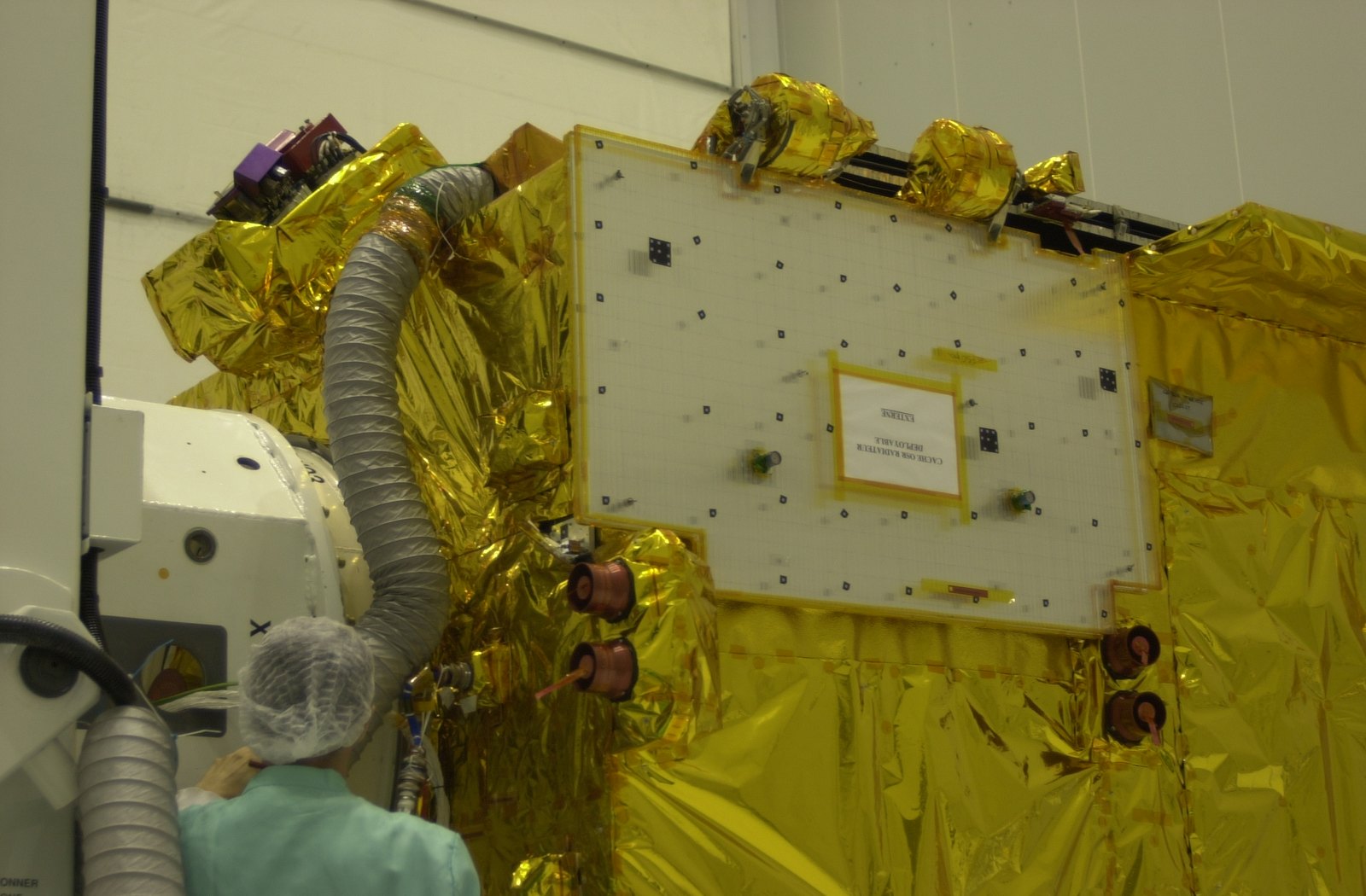
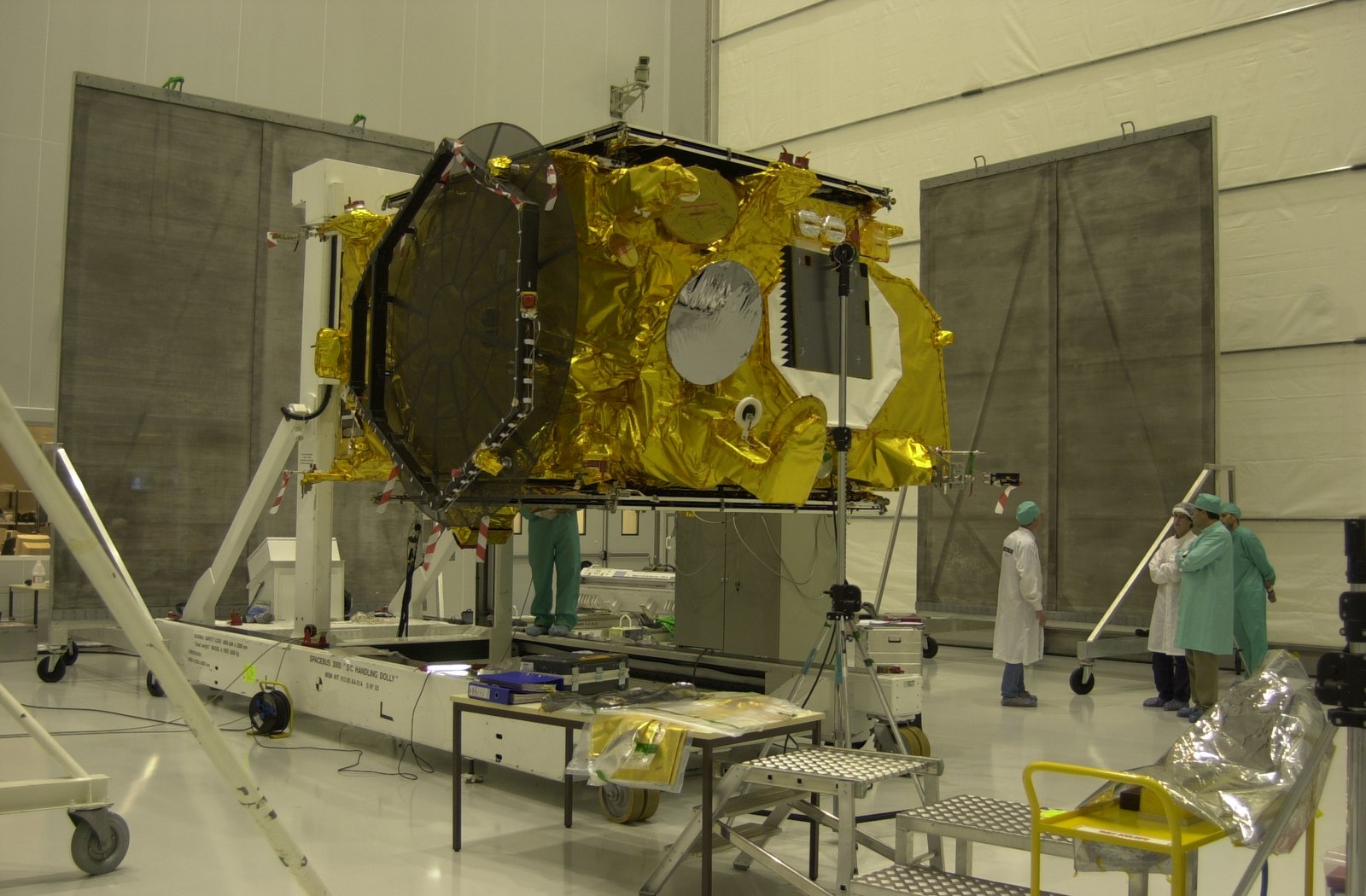
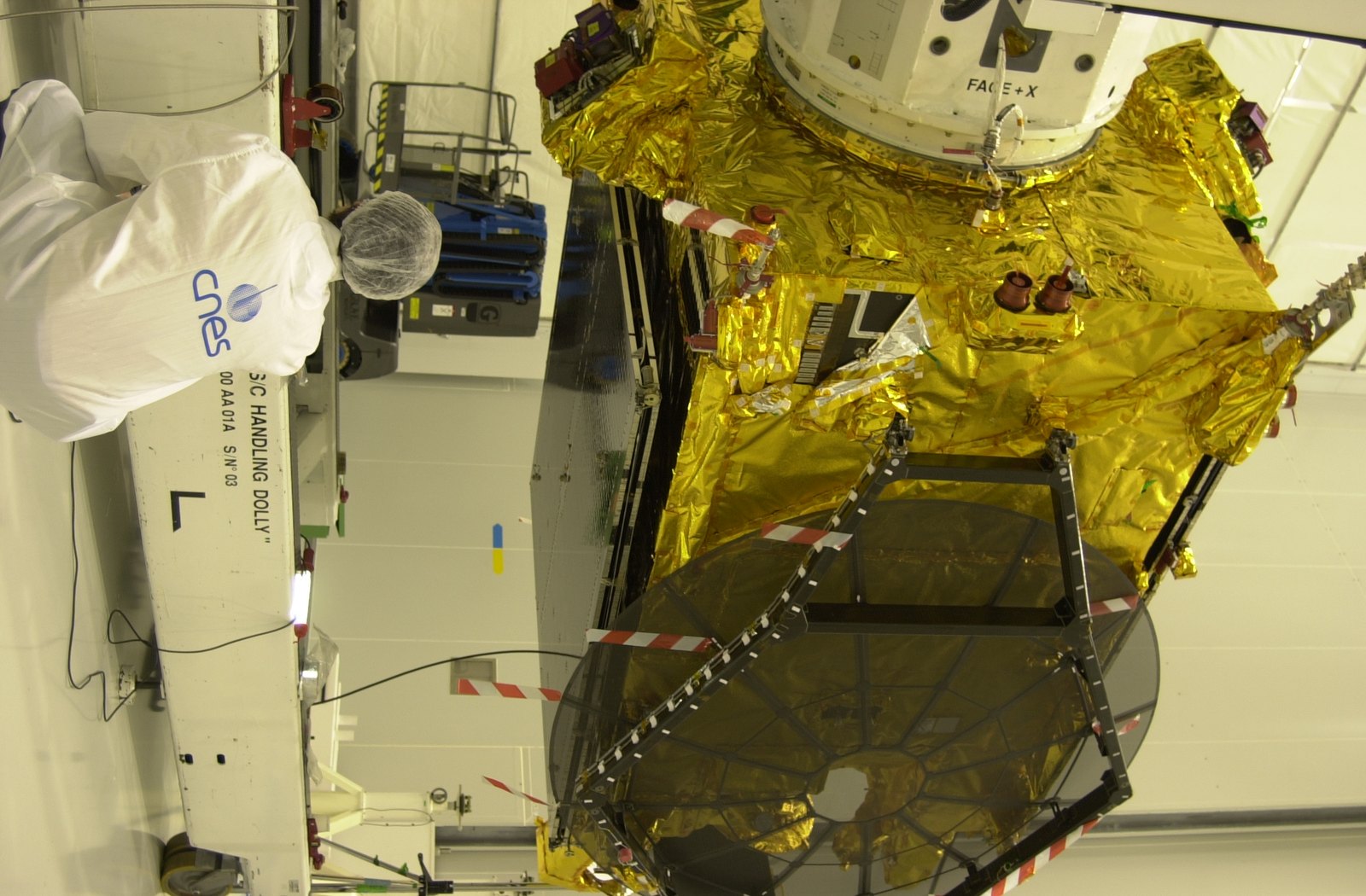
Stentor in its clean room, 15 October 2002. Photographs: Frédéric Swierczynski.
Rosetta, the comet chaser
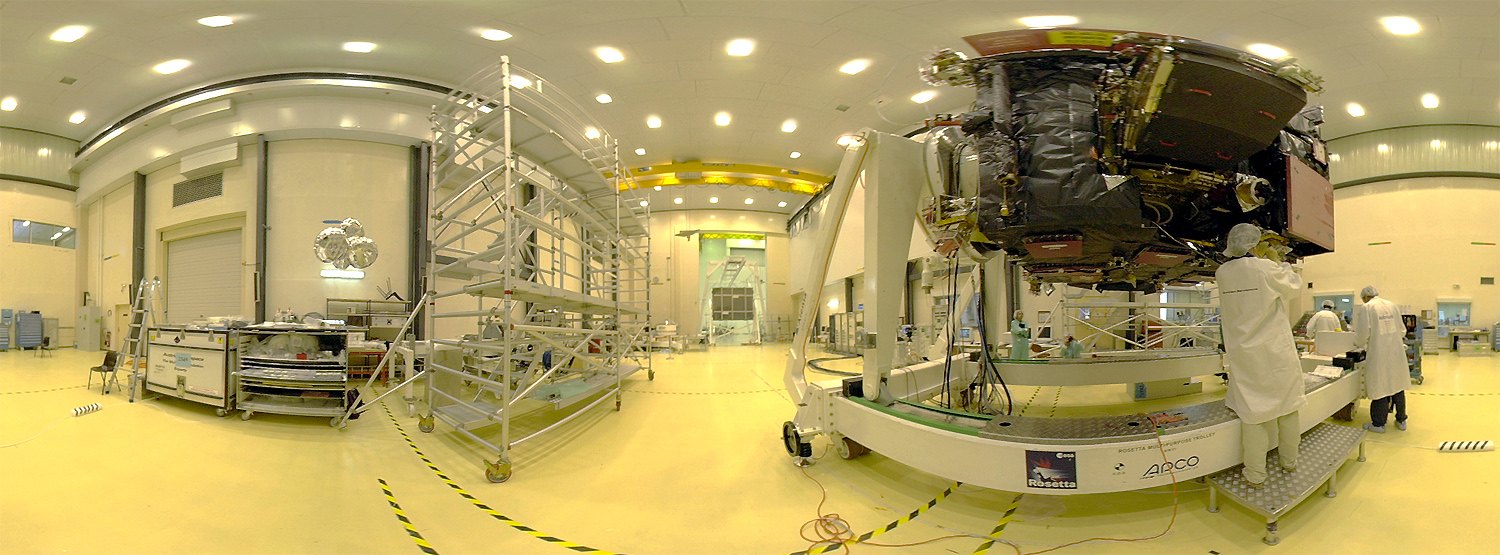
The next day it was Rosetta, the European Space Agency’s mission to orbit a comet and put a lander, Philae, on its surface. It was booked on an Ariane 5 for 13 January 2003, heading for comet Wirtanen.
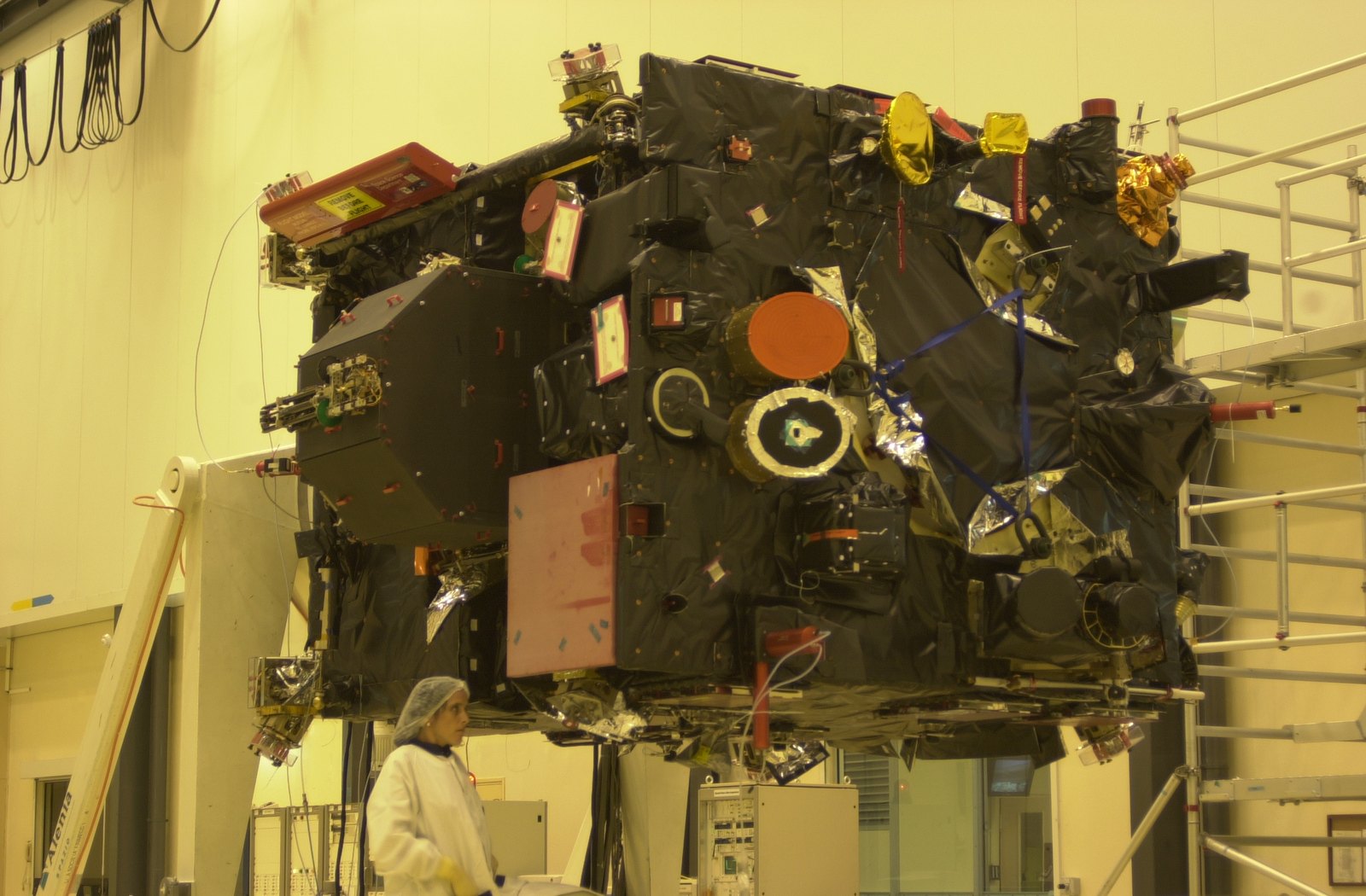
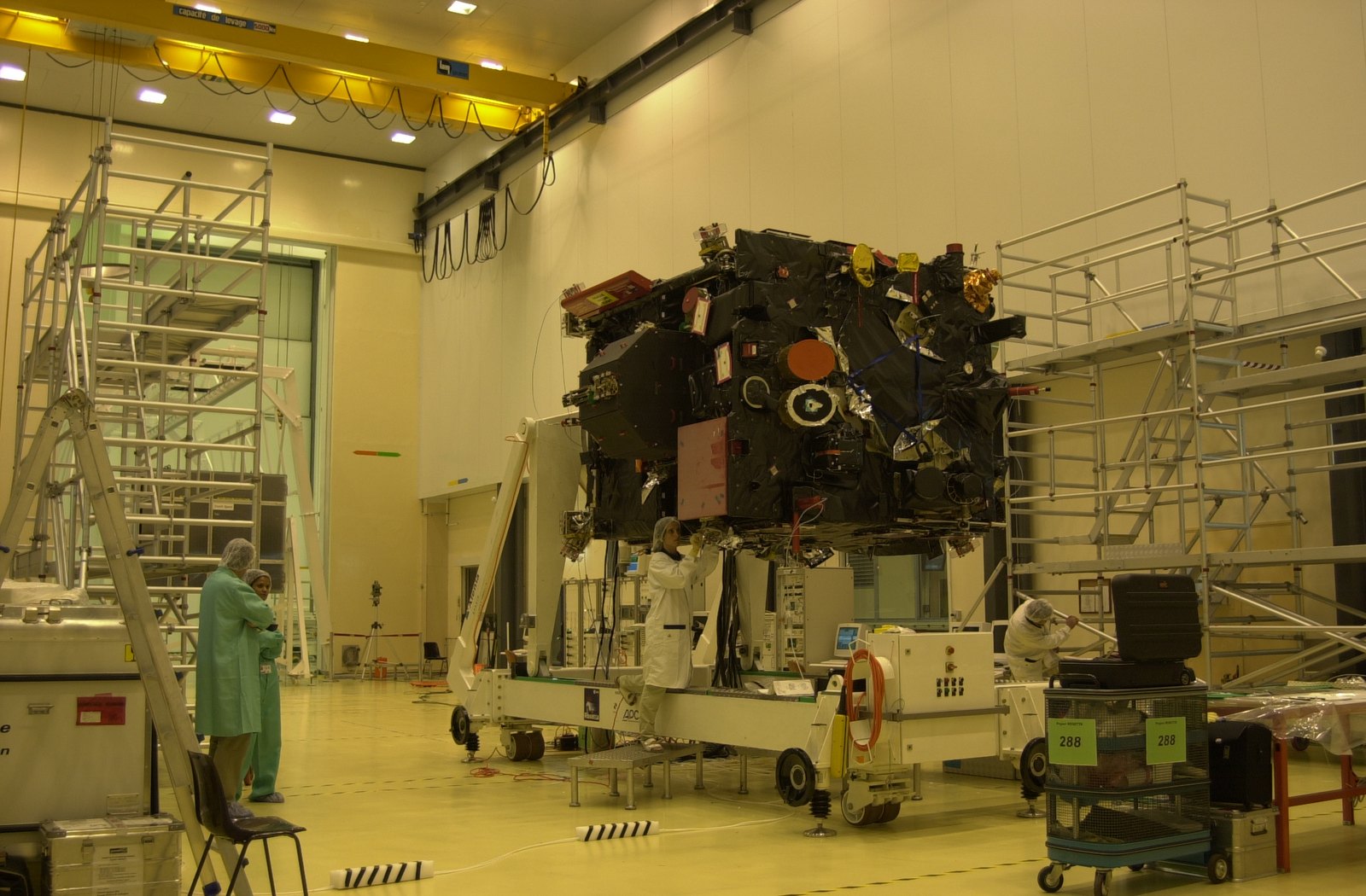
Rosetta, 16 October 2002.
Ariane 5 at the pad
On the last day Fred went out to the ELA-3 launch zone, where an Ariane 5 stood beside its umbilical mast under a tropical sky: the two solid boosters, the cryogenic core stage with its Vulcain engine, the ESA and CNES logos. He shot it from the ground up, and in 360° from beside it.
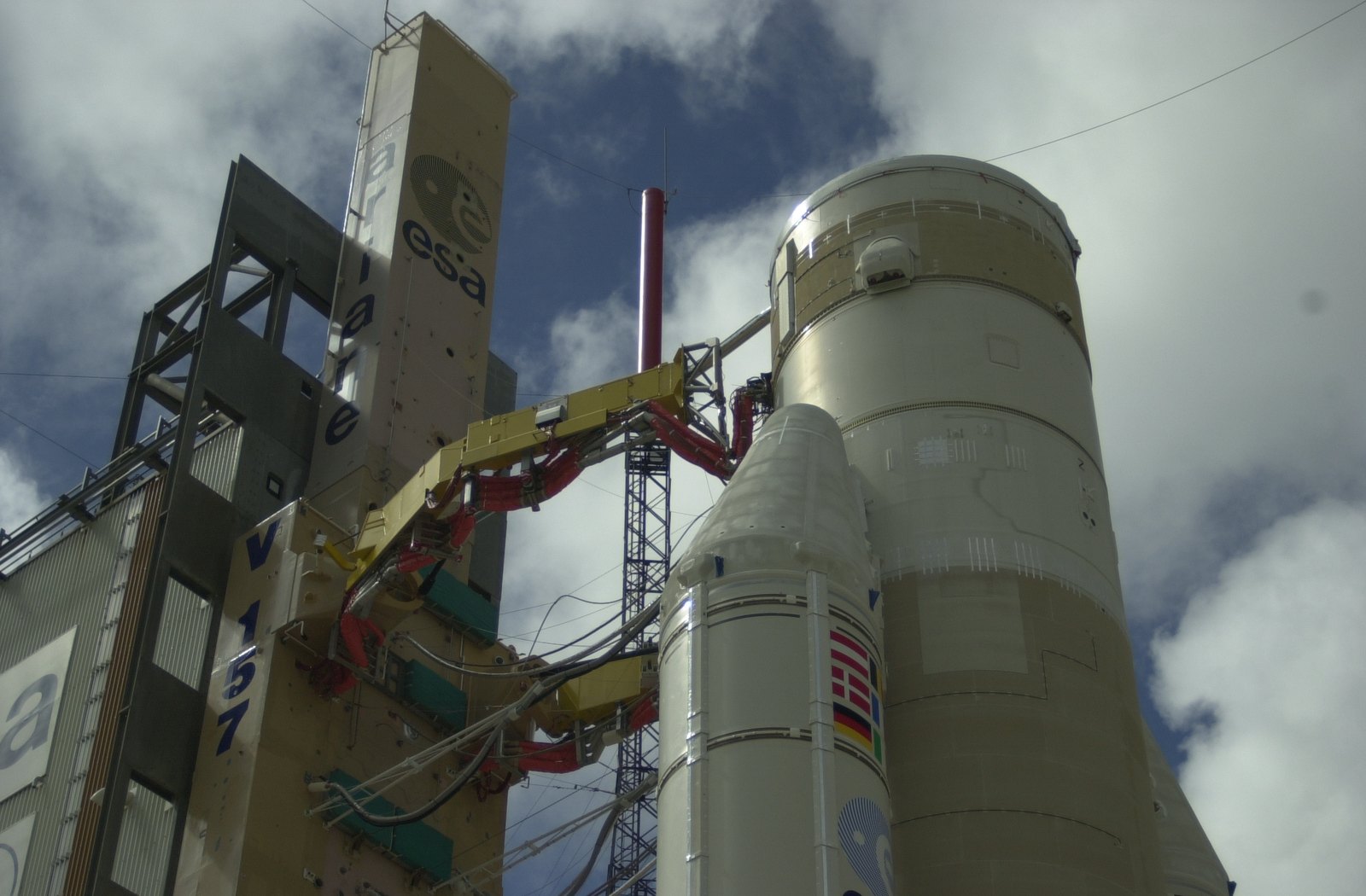
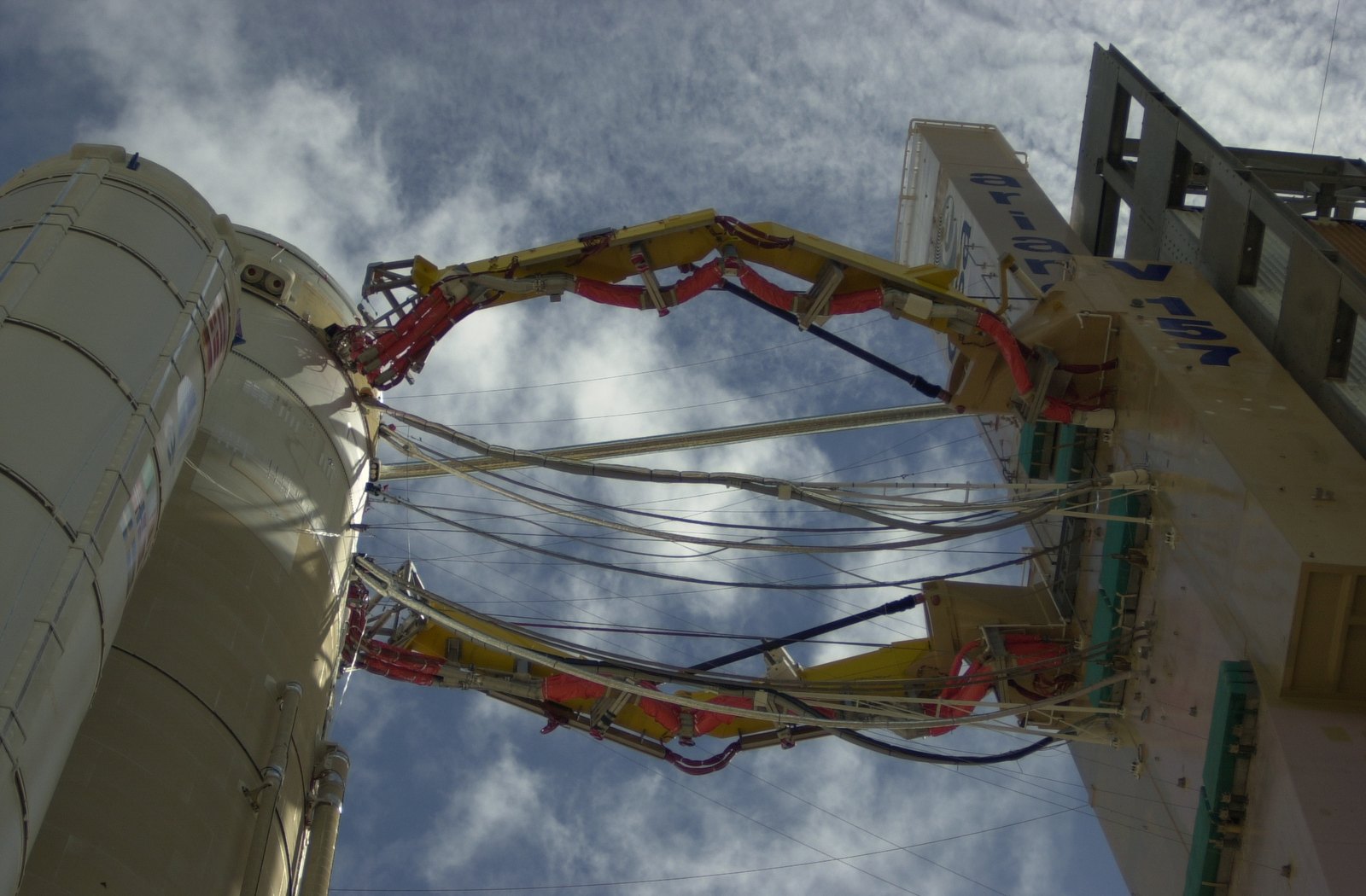
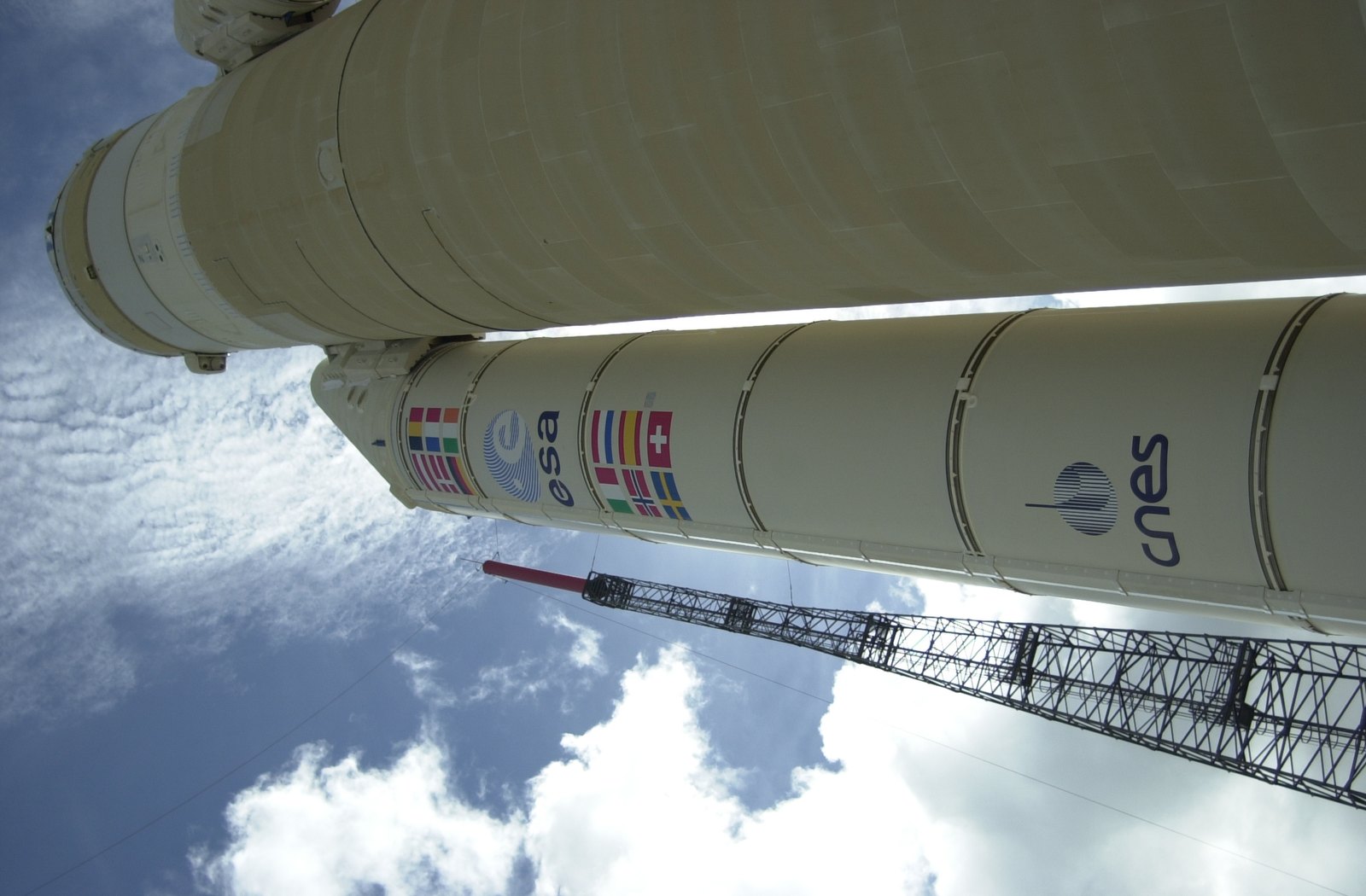
Ariane 5 at ELA-3, 18 October 2002.
Fifty-six days later
Stentor lifted off on flight 157, the maiden flight of the Ariane 5 ECA, with the Hot Bird 7 satellite. About 96 seconds in, the new Vulcain 2 engine developed a cooling problem; the rocket went out of control and was destroyed. Both satellites were lost. Fred’s photographs may be among the last ever taken of Stentor.
Rosetta was the next Ariane 5 passenger. ESA would not launch without a full explanation of the failure, so in January 2003 it cancelled the flight. Rosetta missed its window for Wirtanen, and the team had to find a new comet: 67P/Churyumov-Gerasimenko. It finally launched on 2 March 2004, travelled ten years, and on 12 November 2014 Philae landed on the comet, the first landing ever on one.
That week I opened the 2002 files again and converted the Rosetta views into panoramas. Two satellites, photographed a day apart: one lost in December, the other sent around the solar system on a new course, all decided by the same launch.
A launch campaign, explained
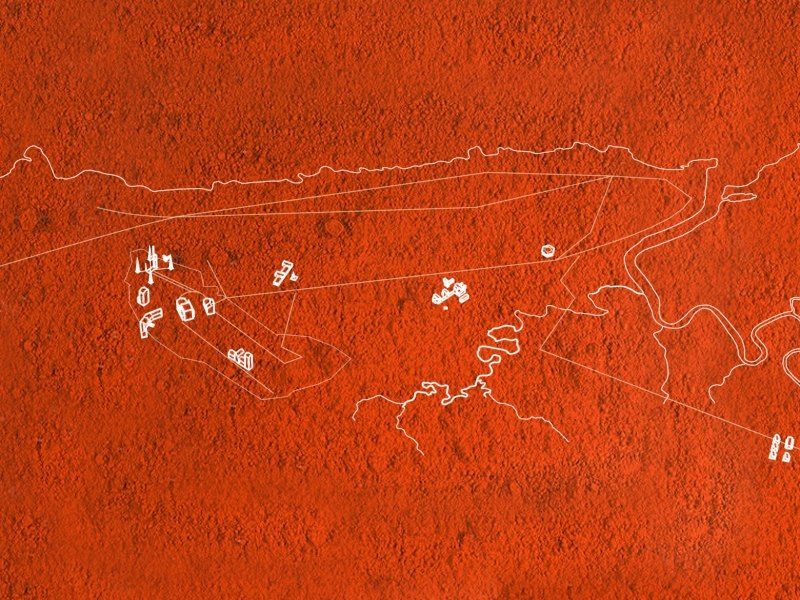
For the 2004 CD-ROM, CNES wanted the public to understand what actually happens in Kourou before a launch. We organised the disc like a campaign, on an interactive map of the base:
- The launcher campaign. The stages arrive by sea at the port; boosters, core stage, upper stage and equipment bay are integrated in the BIL.
- The satellite campaign. The satellite arrives, is checked and fuelled in the clean rooms.
- The combined operations. Satellite and launcher meet in the BAF, pass the readiness review and the dress rehearsal.
- The launch. Roll-out to the pad, final preparation, the synchronised sequence and the mission itself.
Each step had its video, built from CNES footage that included the July 2004 launch, flight 163, and 360° views of the buildings that Fred shot on site. The opening animation, all white lines on red Guianese earth, assembled a satellite and a rocket and then drew the whole base.
Kourou in 360°
By 2002 our 360° work had gone digital. In 1999, for Biron, every view started on slide film. In Kourou Fred shot on a Nikon D1, 2.7 megapixels, with a fisheye lens: two shots back to back, stitched into a sphere. The 2004 views shipped on the disc as protected iPIX files, which I decoded in 2026 and converted into standard panoramas.
Fifteen views: Stentor and Rosetta in their clean rooms and Ariane 5 at the pad in 2002, then the space centre in 2004, from the entrance flags to the Jupiter control room. Drag to look around.
One story in three chapters
From the caves of the Périgord to a plane that cancels gravity, and on to satellites in their clean rooms: the same craft, the same people, further each time.
Biron & Lascaux II
Two heritage CD-ROMs, 1999. Fred lit the Lascaux II replica.
Kourou
This page: Stentor, Rosetta and Ariane 5, 2002 and 2004.
Photography in Kourou, 2002 and 2004: Frédéric Swierczynski.
Production and interactive design: Stéphane Jacob, with the Doo Interactive team of video editors and multimedia producers.
CD-ROM produced by Doo Interactive for CNES, 2004. Launch footage on the disc: CNES.
Facts: CNES, ESA, Spaceflight Now and the Stentor and Guiana Space Centre entries on Wikipedia.