Universal360 · Atlantic Venture Group · 2000–2026 · Case study

Superyachts, on record

LiDAR digital twins today, iPIX spheres twenty-five years ago

Superyachts as LiDAR digital twins with Paul Shersby and Universal360, and the iPIX yacht spheres I shot for CNB and Ferretti in 2000 and 2001.

Paul Shersby loves being on set. I prefer what happens afterwards. That split has turned into a working partnership: Paul’s company, Universal360, scans superyachts as LiDAR digital twins, and Atlantic Venture Group does the post-processing.

It also closes a loop. Twenty-five years ago, at Doo Interactive in Bordeaux, I was putting yachts into 360° for CNB and Ferretti. The second half of this page is that work, recovered from a hard drive and restitched.

72 m

No Rush, designed by Giorgio Armani

8

complete scans during her build

2018 → 2022

one yacht, before and after her refit

25 years

from iPIX spheres to LiDAR twins

During the build

No Rush: eight scans, one build

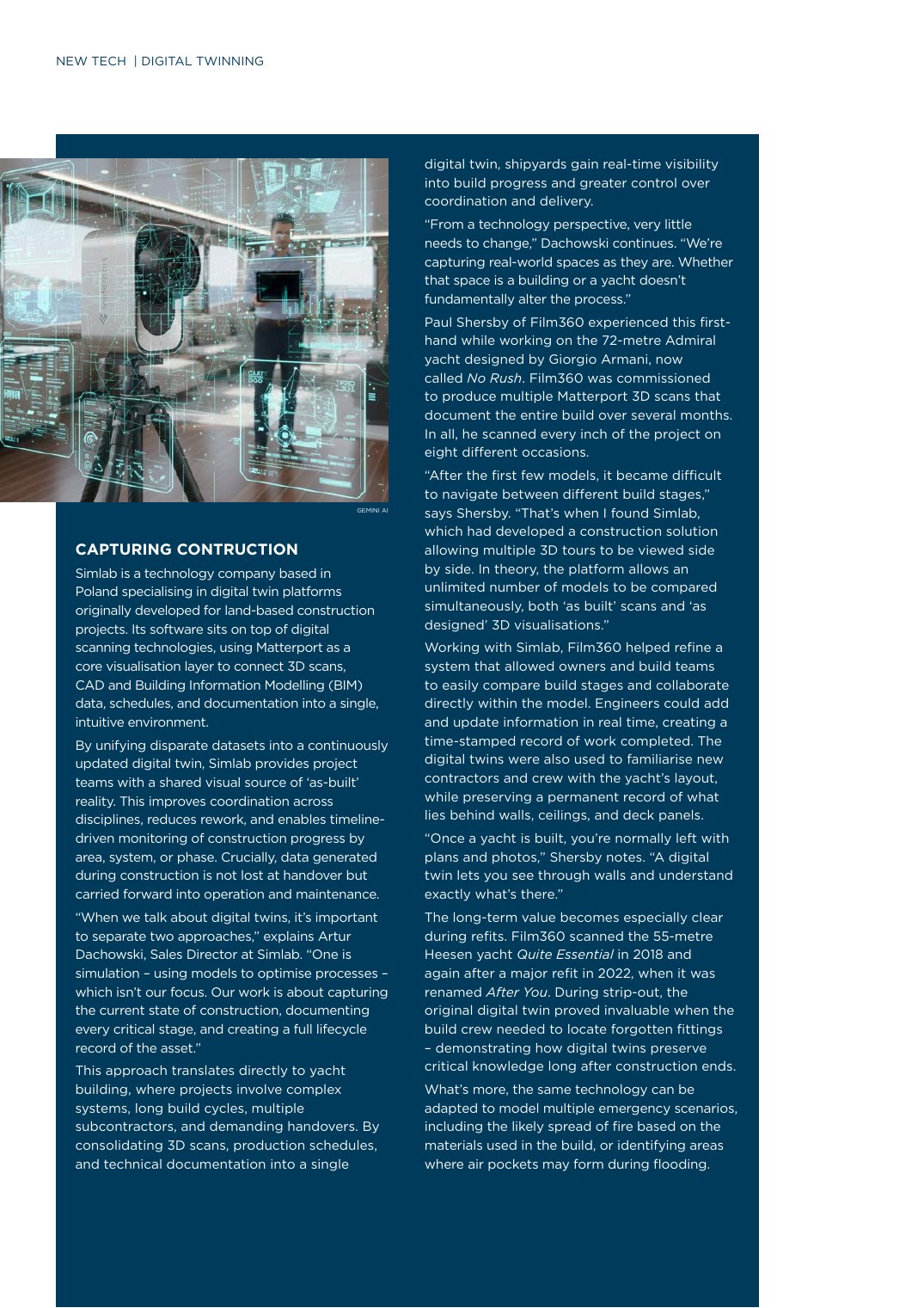
The 72-metre Admiral superyacht designed by Giorgio Armani, now No Rush, was scanned on eight separate occasions over several months of construction at The Italian Sea Group in Tuscany. Each scan is the whole yacht at one stage of the build.

Side by side, those stages become a time-stamped record. Owners and build teams compare them, engineers add information inside the model, new contractors and crew learn the layout before they board, and whatever is hidden behind walls, ceilings and deck panels stays visible long after they are closed.

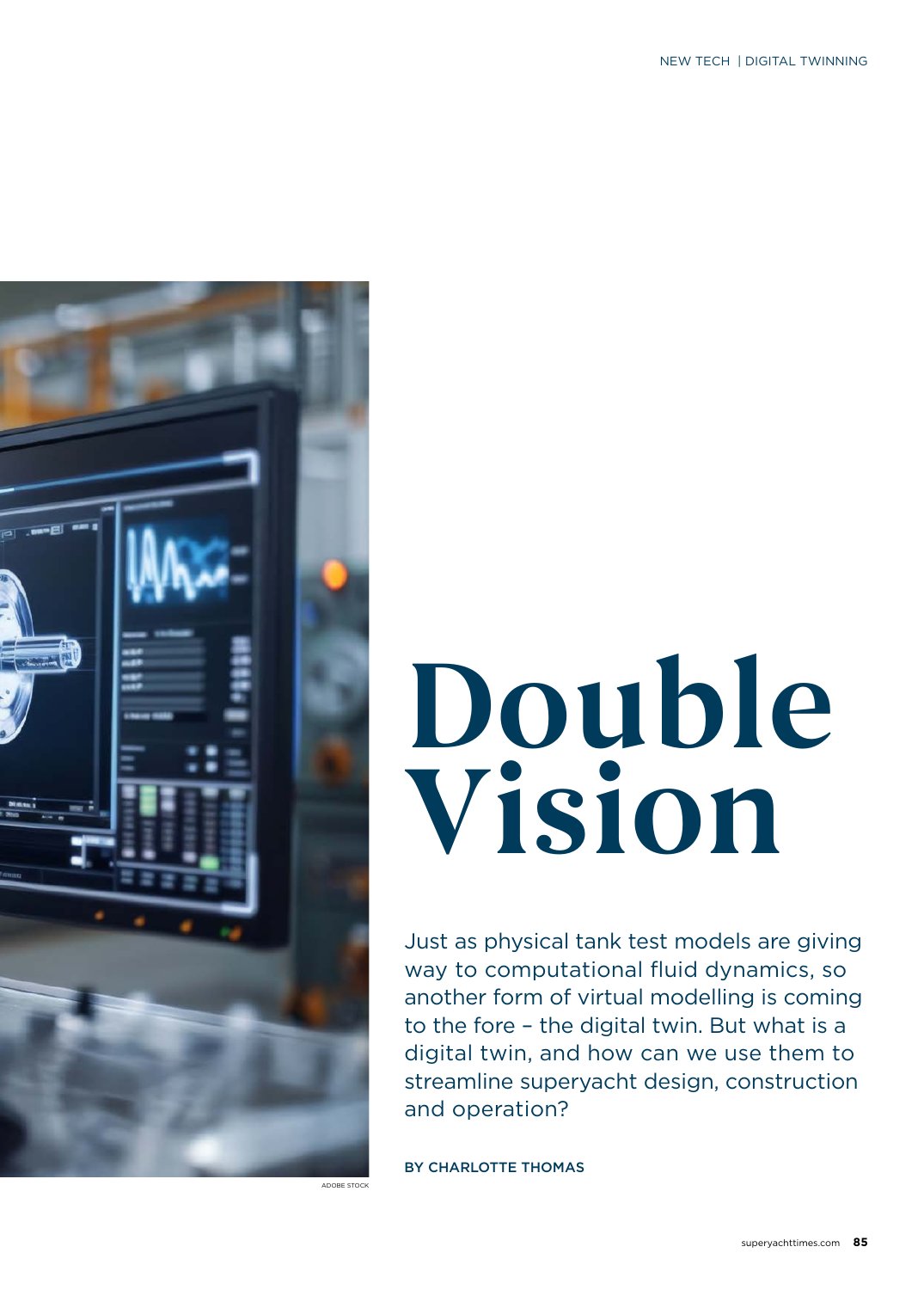
Double Vision, the digital twinning feature in How to Build It issue 10The page on the No Rush build scans and the Quite Essential / After You refit

Featured in Double Vision, the digital twinning feature in Superyacht Times' How to Build It, issue 10. Click a page to enlarge.
“A digital twin lets you see through walls and understand exactly what’s there.”

Paul Shersby, in How to Build It, issue 10

Before and after the refit

One yacht, two digital twins

The 55-metre Heesen Quite Essential was scanned in 2018, then again in 2022 after a major refit that renamed her After You. During the strip-out, the first twin helped the crew find fittings nobody remembered. Both are online.

Before and after, side by side

Both twins loaded together and linked: walk through the 2018 yacht and the 2022 refit at the same time, or drag the slider to wipe from one to the other.

Open the comparison full screen →

On set, and in post

Paul on board, me in post

Paul comes from the film industry, where he was a location manager, with production credits including Braveheart, Four Weddings and a Funeral and Empire of the Sun. Getting a scanner into every space of a working yacht, at the right moment, with the crew on side, is a location manager’s job.

I have always been happier with the files than on the shoot: processing, stitching, rebuilding. That was true with film scans in 1999, with fisheye footage in 2002, and it is true with LiDAR today.

Where it started

Yachts in 360°, in 2000

In 2000, at Doo Interactive in Bordeaux, we made a CD-ROM for the yacht builder CNB: 18 iPIX spheres of a large sailing yacht, from the saloon and galley to the chart table, the engine room and the deck, alongside 3D work textured by our friends at Algory. Algory later became Lumiscaphe, now a reference in real-time 3D visualisation for aviation and automotive. Its founder, like me, came from the Amiga.

A year later we shot a Ferretti motor yacht at a boat show: 21 more spheres, from the helm to the flybridge. Both sets sat on an old drive in formats nothing opens any more, so I decoded them again for this page.

CNB · 2000
Ferretti · 2001

Drag to look around. The original iPIX spheres from 2000 and 2001, recovered and restitched in 2026.

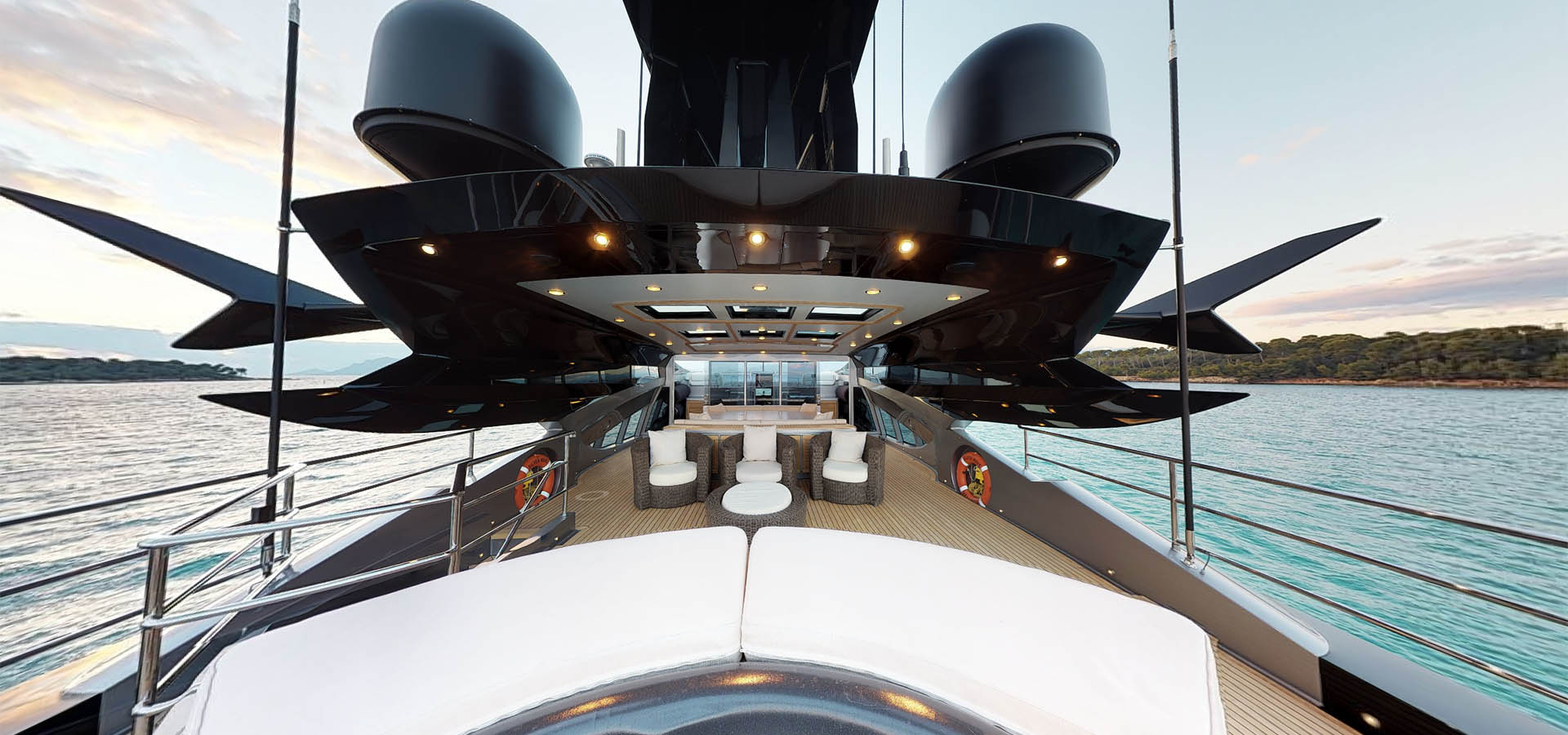
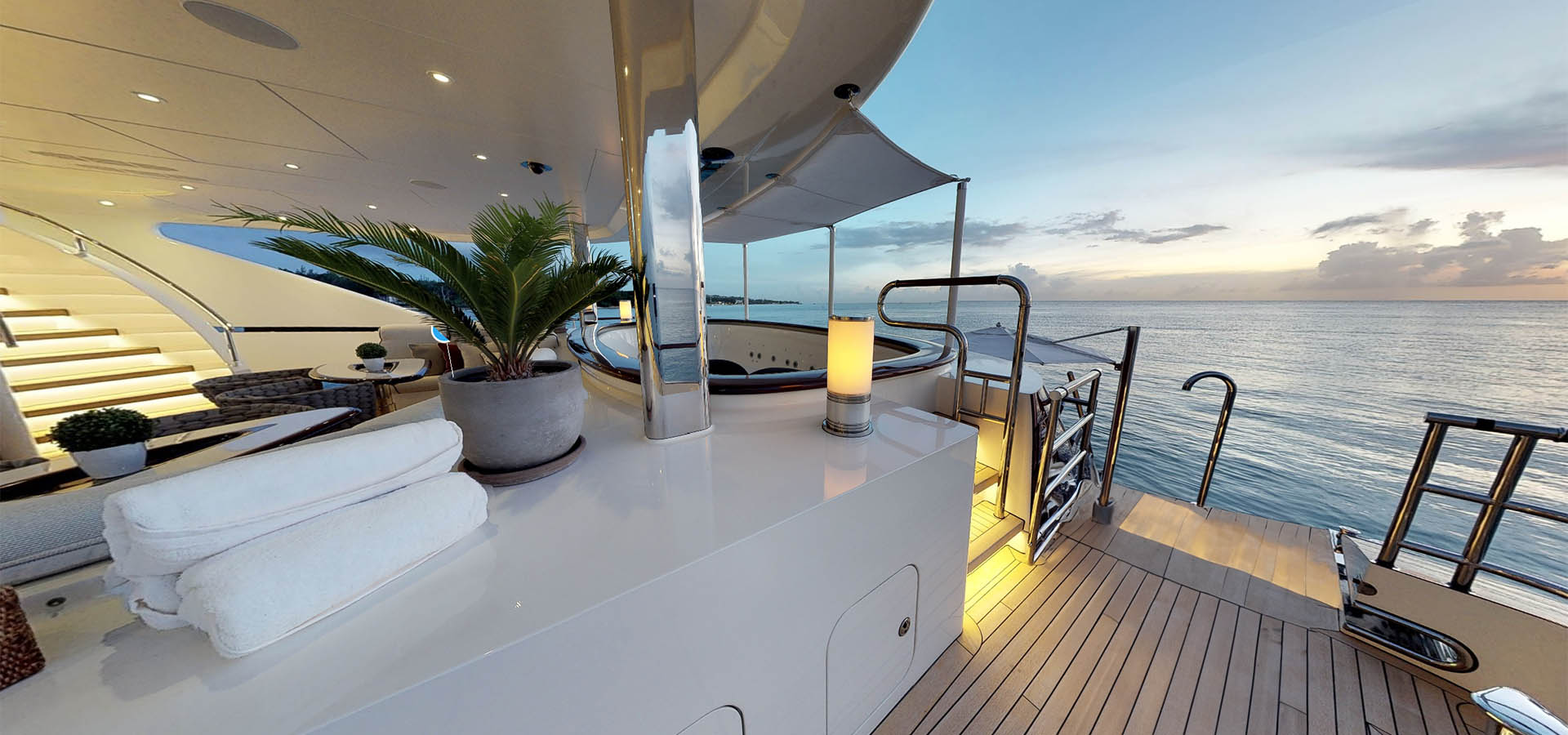
CNB, 2000: on deck.
CNB, 2000: on deck.
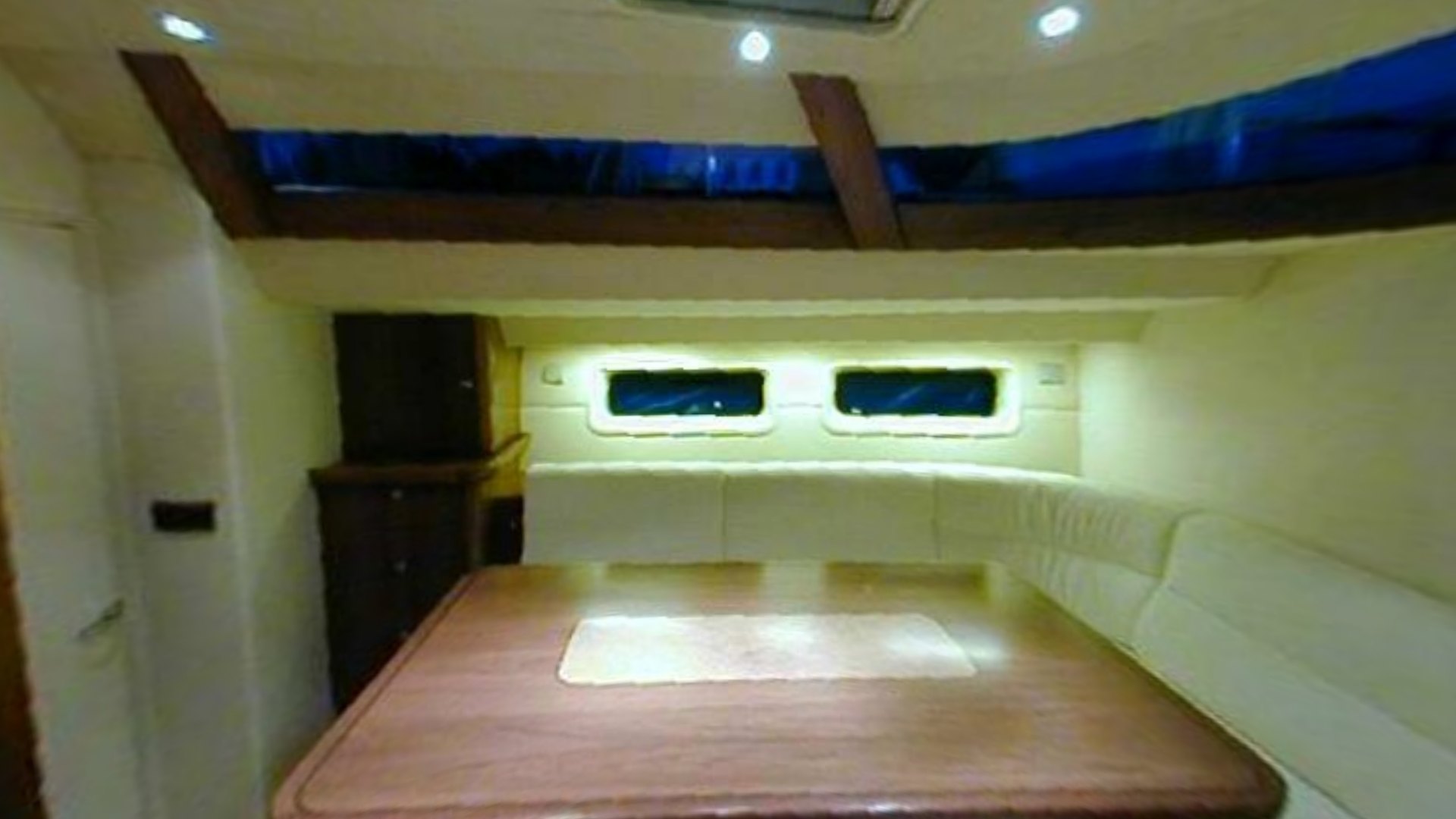
CNB, 2000: the saloon.
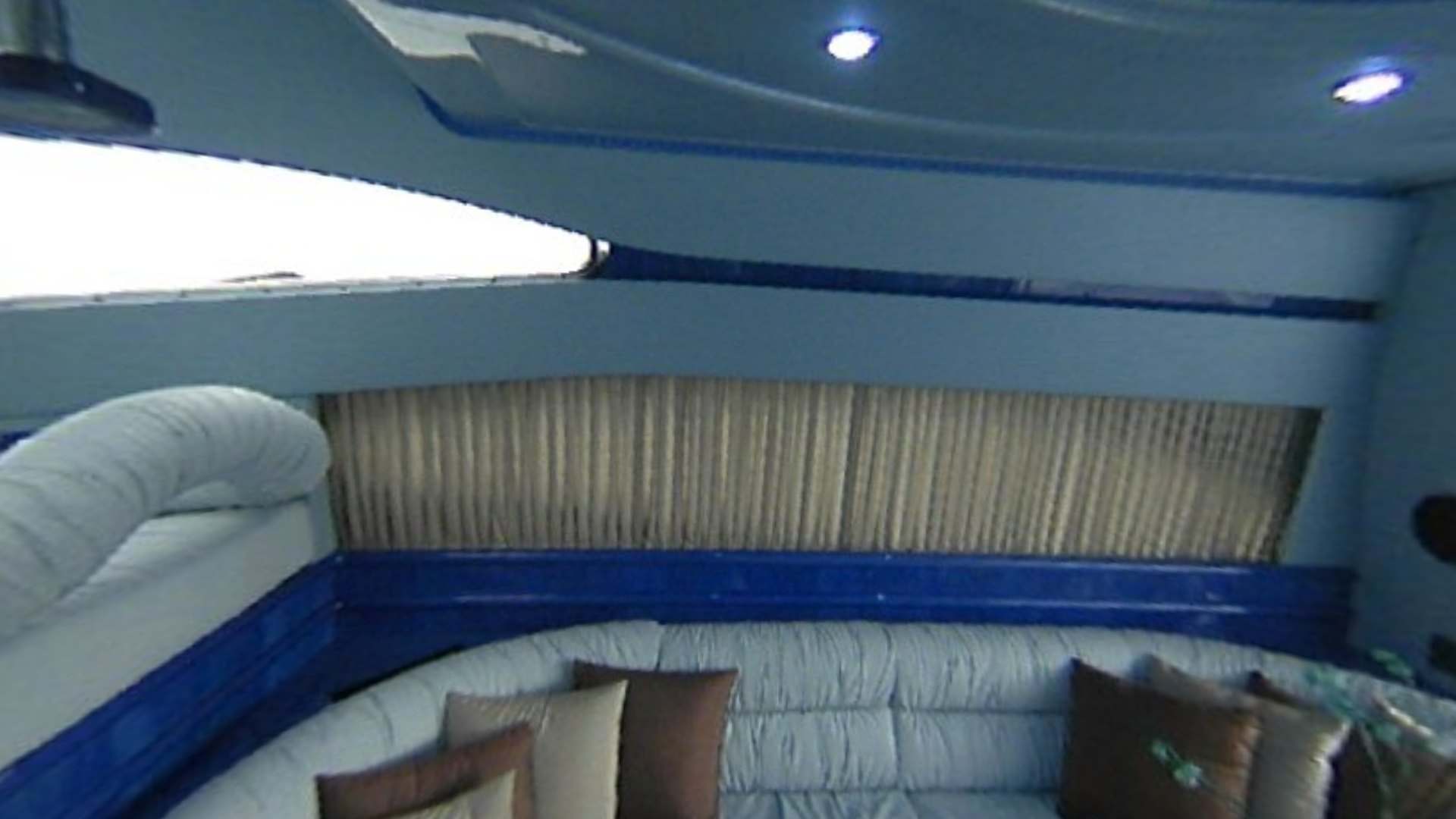
Ferretti, 2001: saloon.
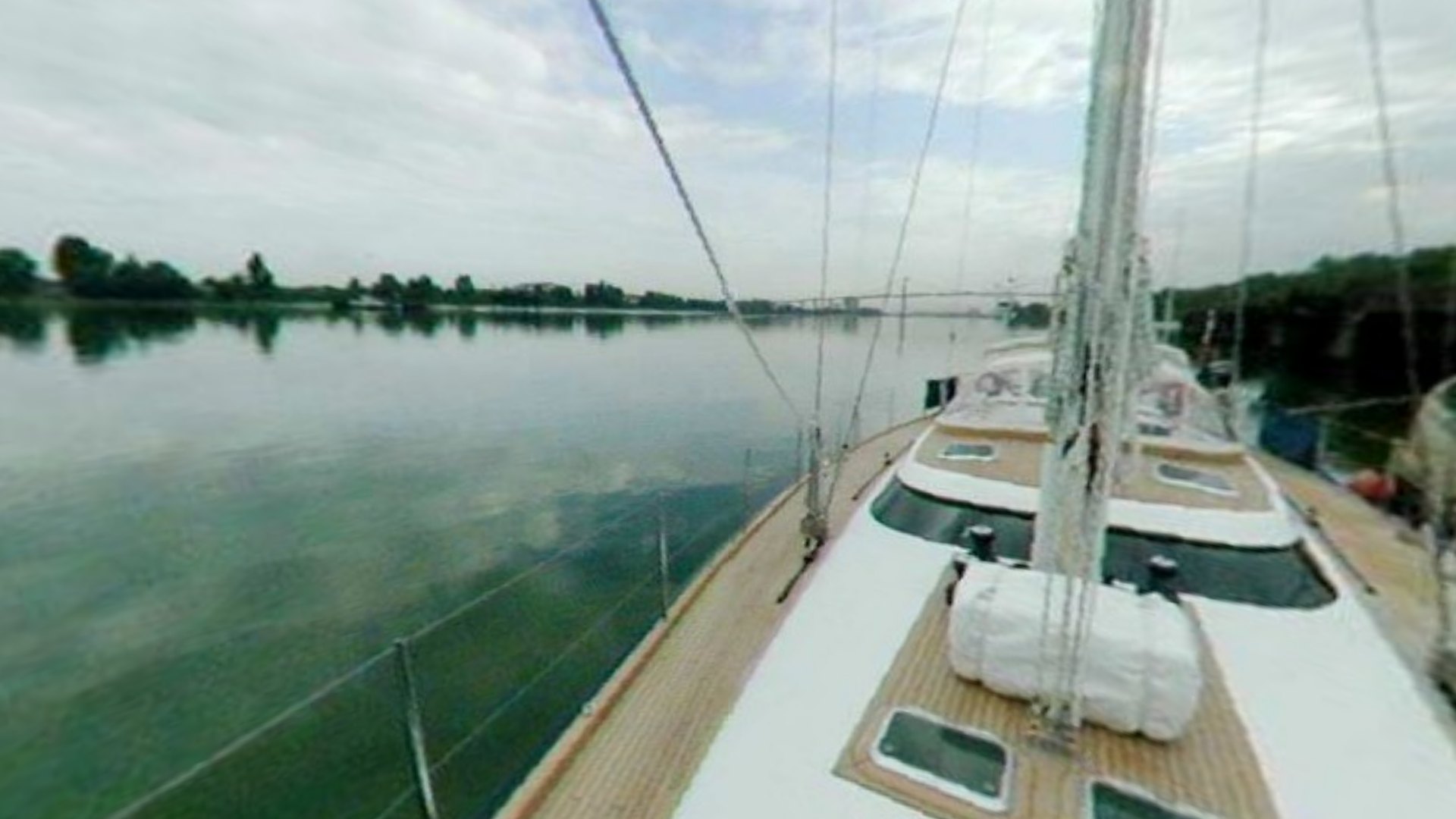
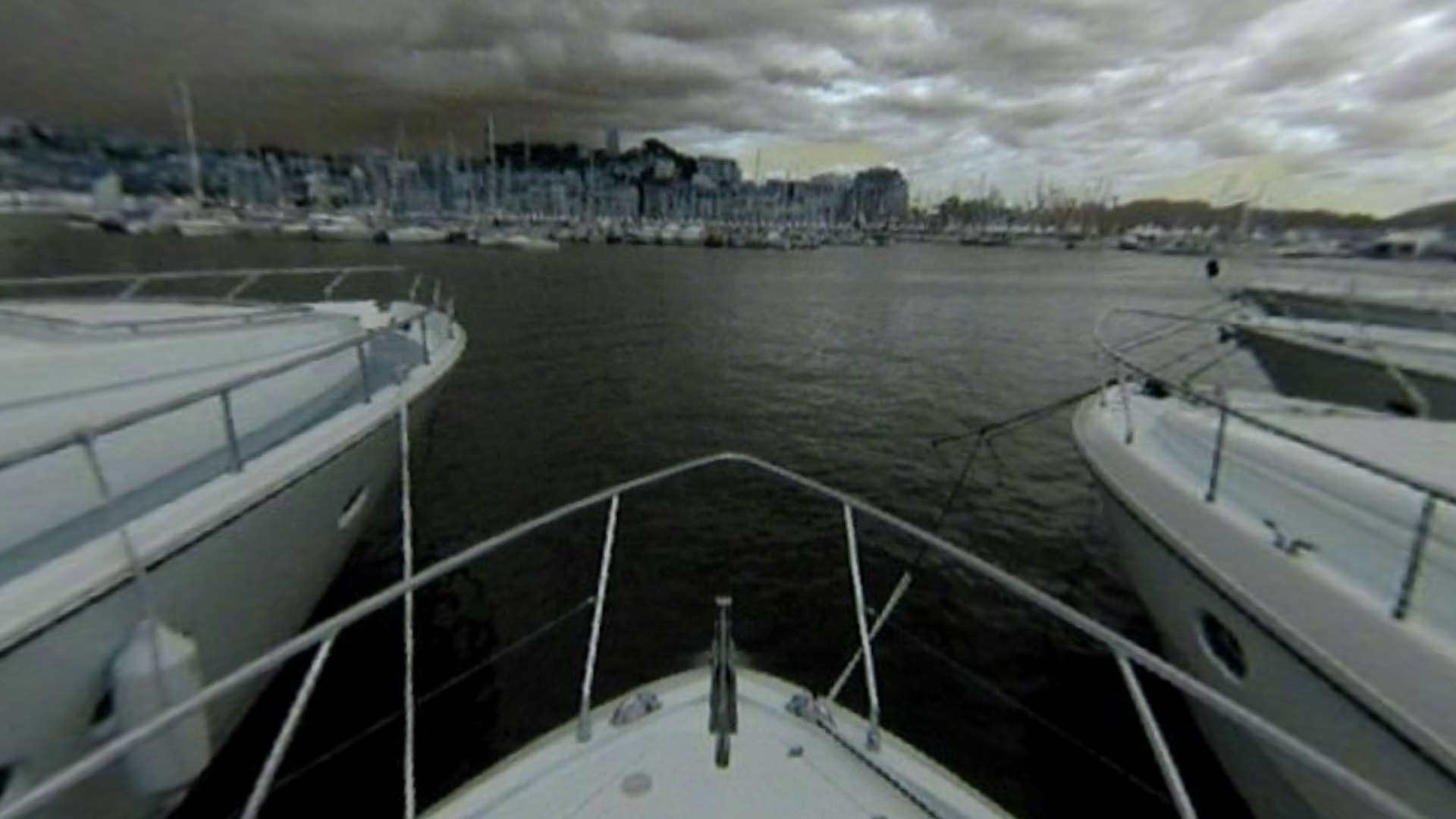
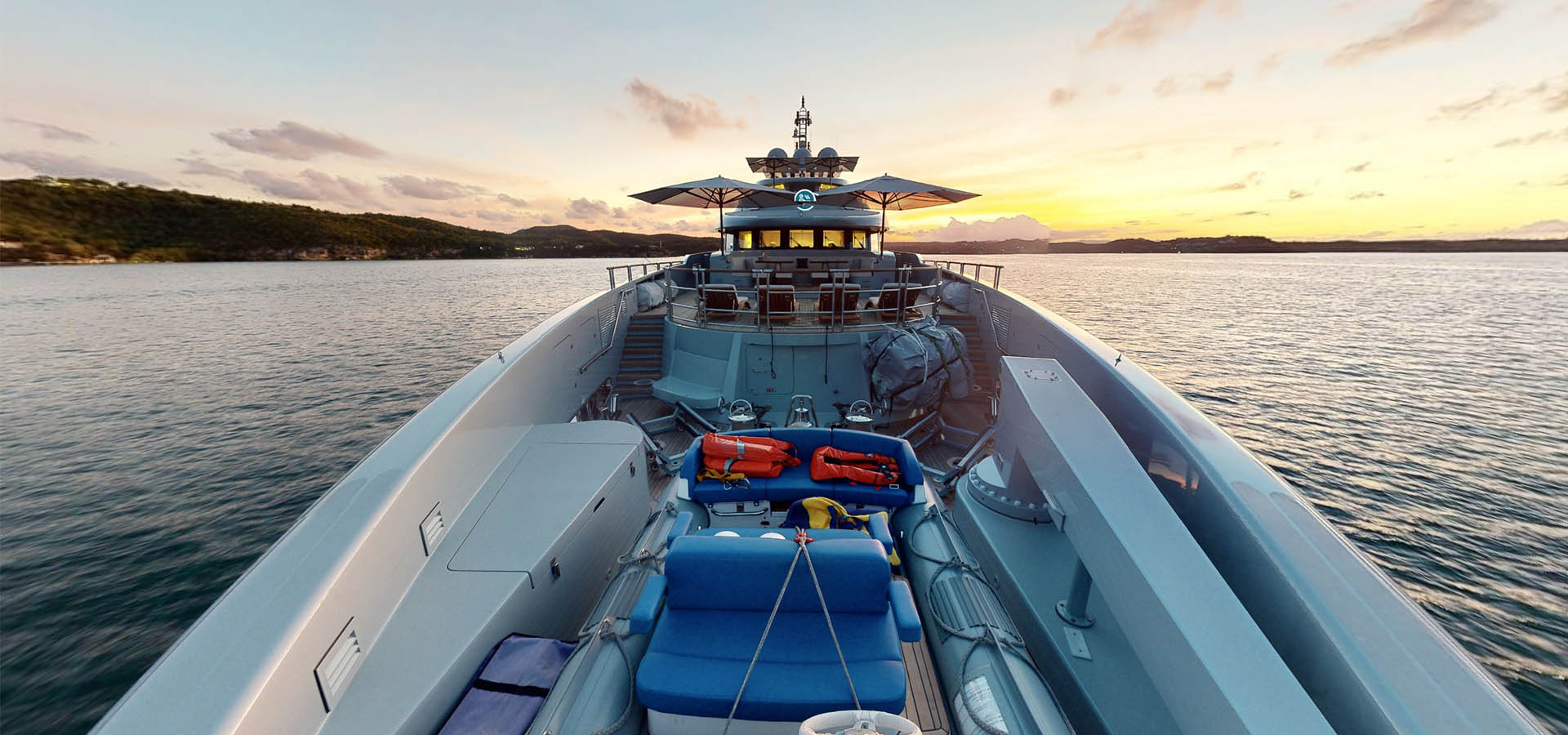
Ferretti, 2001: from the bow.
Algory, 2000

Choose the materials

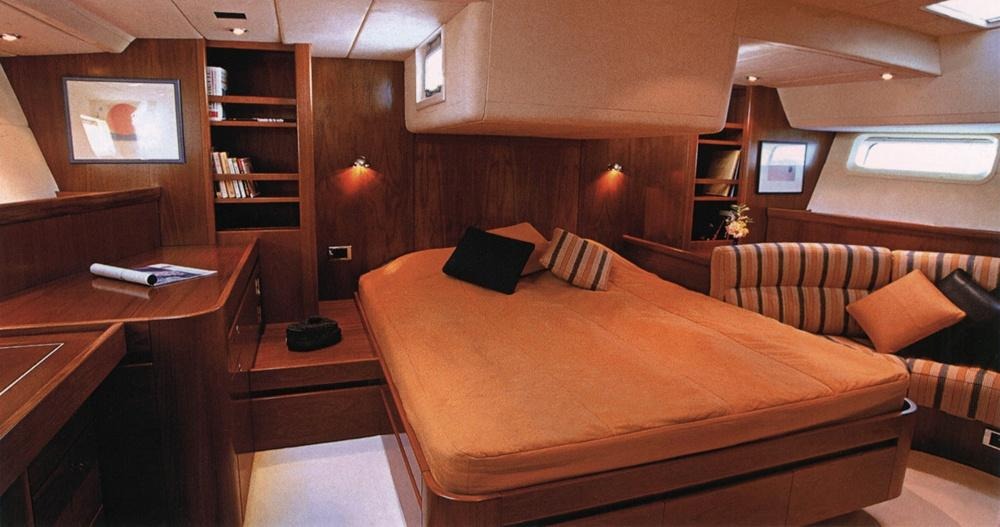
The CNB CD-ROM also carried a material configurator for the owner’s cabin, made with our friends at Algory: wall panels, floor, desk top and bedspread, swapped on the image of the real cabin. Algory became Lumiscaphe, which now does exactly this in real time for aircraft cabins and car interiors.

Owner's cabin of the CNB yacht, from the 2000 material configurator
Wall panel
Floor
Desk top
Bedspread

The original configurator images, pulled out of the 2000 CD-ROM. Pick any combination.

What changed

From a sphere to a twin

2000–2001Today
CaptureTwo fisheye shots back to backLiDAR scanning, room by room and deck by deck
ResultA photographic sphere you can look aroundA measurable 3D model you can walk through
DeliveryA CD-ROM for the shipyardA web link for owner, captain, yard and crew
Over timeOne moment, one boat showEvery build stage, before and after a refit, side by side

The idea is the same as in 2000: put the viewer on board. The difference is what they get. A sphere shows a yacht. A digital twin measures it, records it and keeps it, from the first week of the build to the next refit.

Credits

Today: LiDAR digital twins by Paul Shersby (Universal360 / Film360), post-processing by Atlantic Venture Group.
2000–2001: CNB and Ferretti iPIX spheres by Doo Interactive, Bordeaux; 3D textures for the CNB CD-ROM by Algory.