Atlantic Venture Group · Dubai · 2025 · Case study

Mercedes-Benz Off-Road, playable

A real test track, rebuilt as a real-time game

Summer 2025: the Mercedes-Benz Off-Road Experience Center in Dubai, captured in 360°, rebuilt in 3D and turned into a real-time G63 experience for PC, Meta Quest 3 and a four-player split screen.

In the summer of 2025 the operator of the Mercedes-Benz Off-Road Experience Center in Dubai asked for something visitors could take further than the track: a real-time 3D version of the centre, with the G63, that anyone could drive.

So I filmed the whole site in 360°, rebuilt it in 3D, built the G-Class for real time and set it loose: through the obstacles, then out into the dunes. It runs on a gaming PC, in a Meta Quest 3 headset, and on a split screen where four people drive together.

The real centre, from the 360° capture the 3D world was rebuilt from. Drag to look around.

1

real site, captured in 360°

3

ways to play: PC, Quest 3, split screen

4

drivers on one screen

2025

summer delivery

The game

Digital landscape

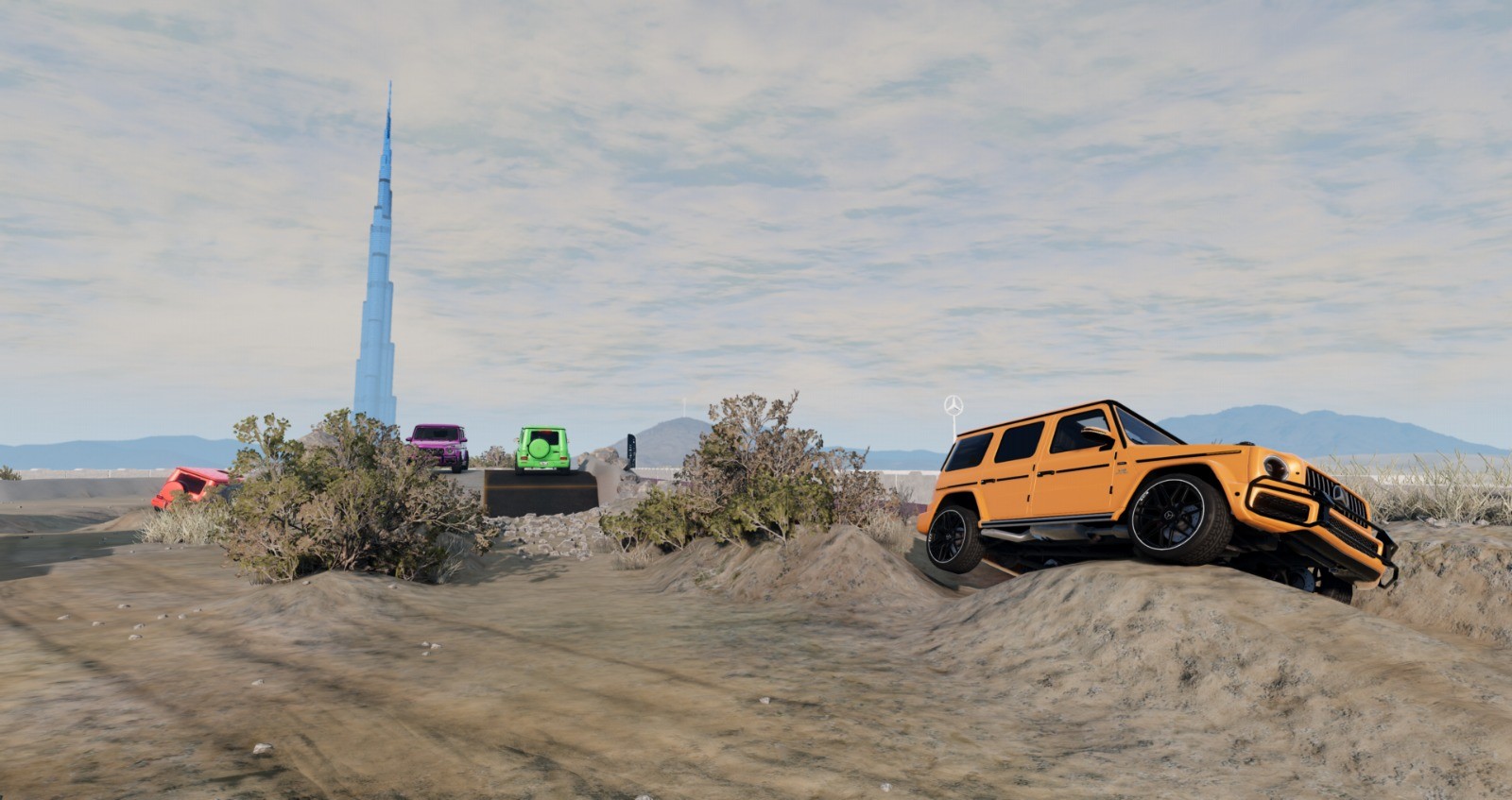
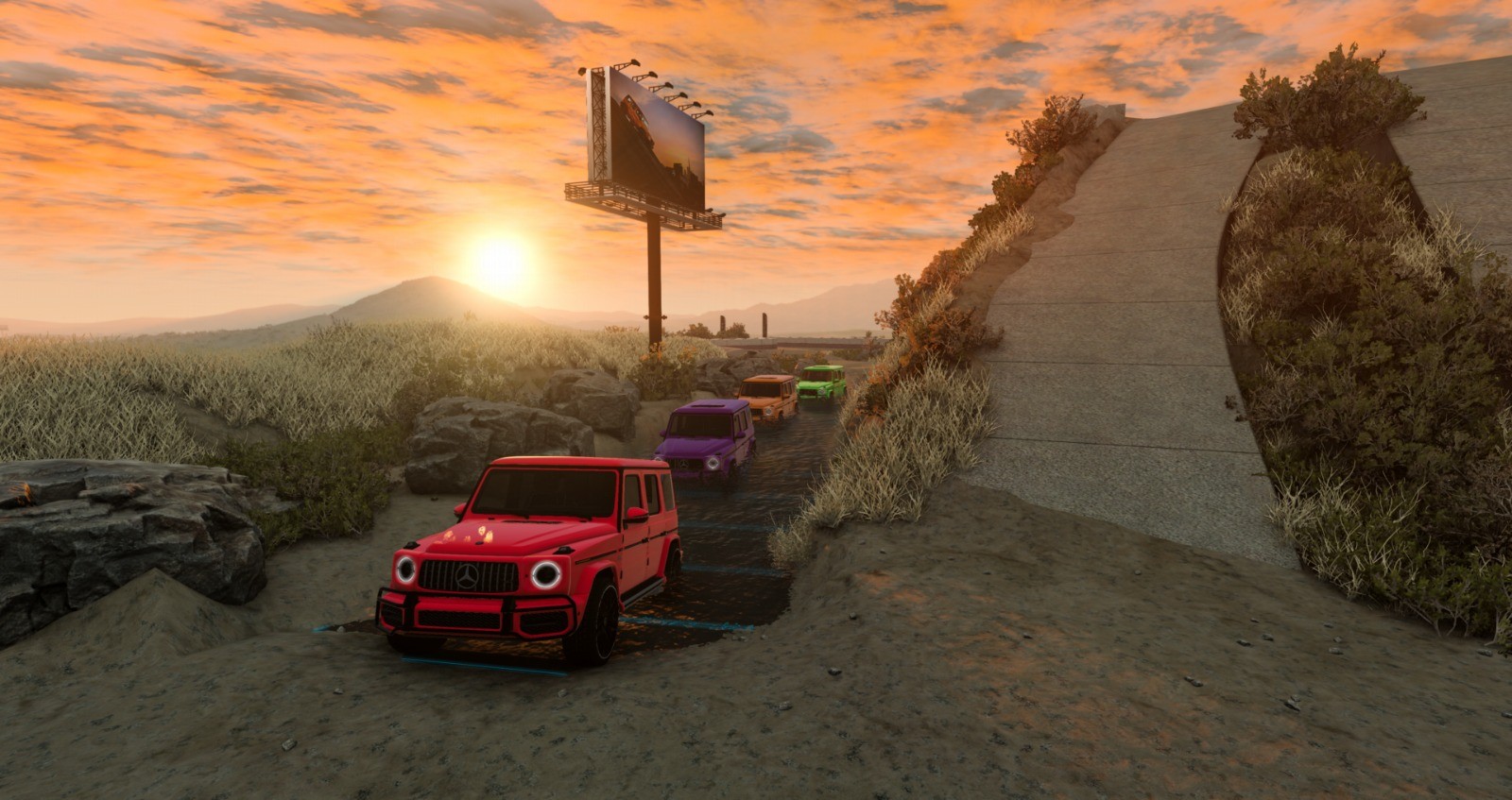
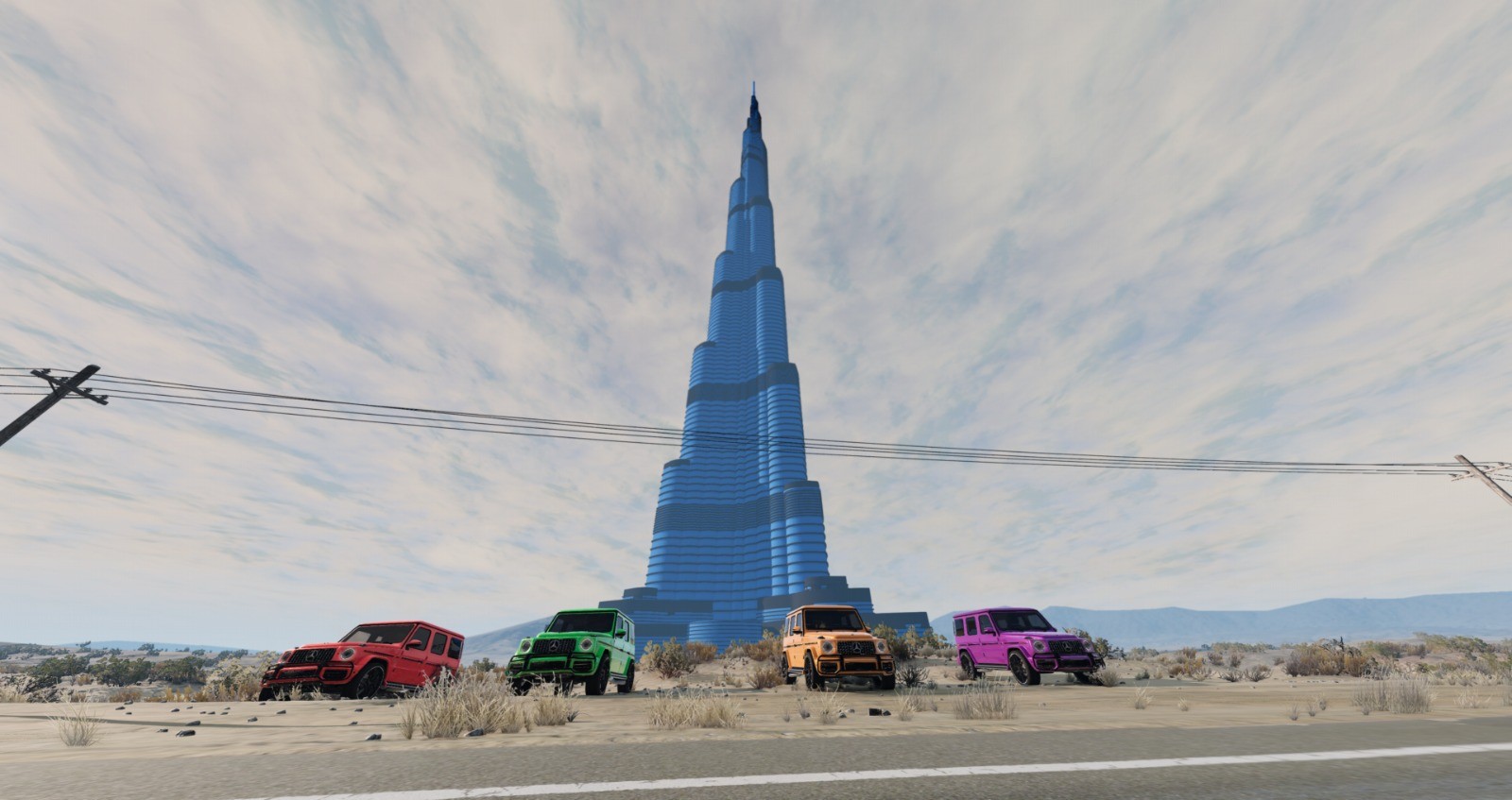
In-game footage, captured in real time.

From track to game

Capture, rebuild, drive

It is the same workflow I have followed since the 1990s: capture the real thing properly, then rebuild it. What changes in real time is the vehicle. A rendered car only has to look right in one frame; a playable one has to look right at sixty frames a second, from every angle, while its suspension works over a boulder field. Geometry, UVs and textures are built very differently for that.

STEP 1
Capture
The whole centre filmed in 360°, obstacle by obstacle, from the vehicle and on foot.
STEP 2
Rebuild
Terrain, slopes, boulders, the wading pool, signage and buildings rebuilt in 3D from that footage.
STEP 3
Vehicle
The G63 built for real time: geometry, suspension behaviour, UVs and textures that hold up at 60 fps.
STEP 4
Expand
Beyond the fences: open dunes, a desert road and the Dubai skyline to drive towards.
STEP 5
Deploy
Packaged for a gaming PC, a Meta Quest 3 headset and a four-player split screen.
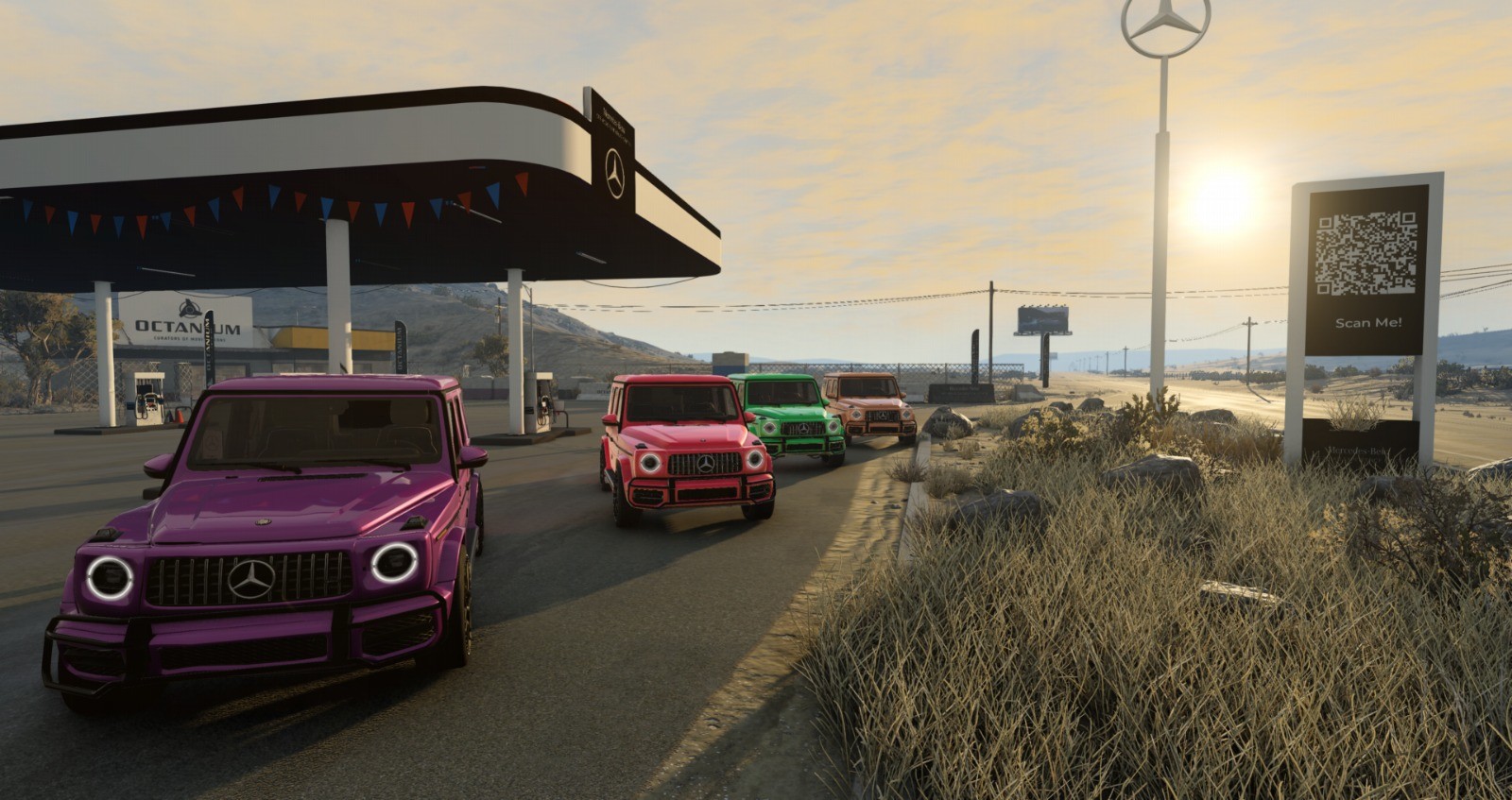
In the game

From the obstacles to the dunes

Arrival at the centre.
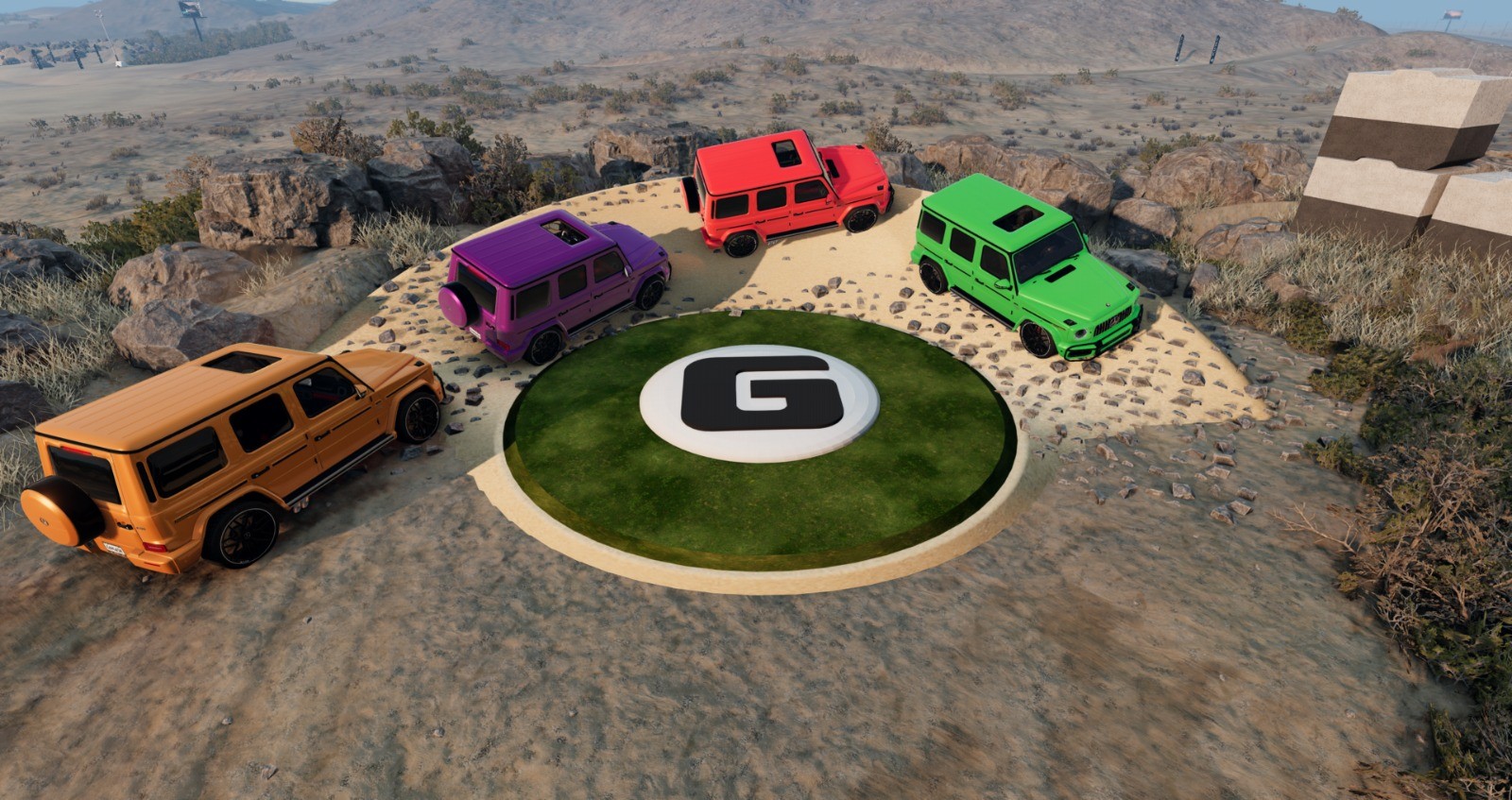
The G turntable.
The G turntable.
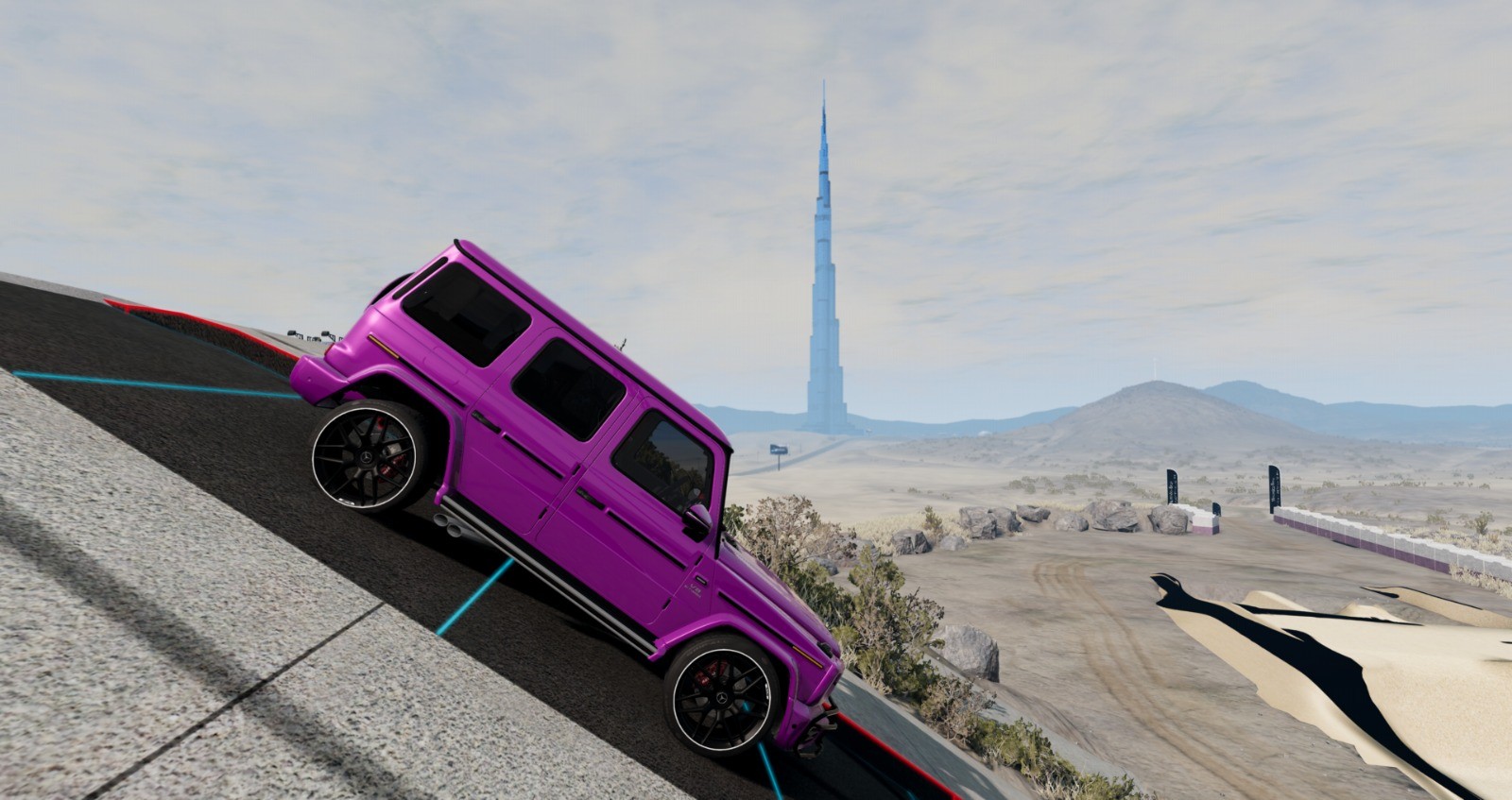
Side slope.
Side slope.
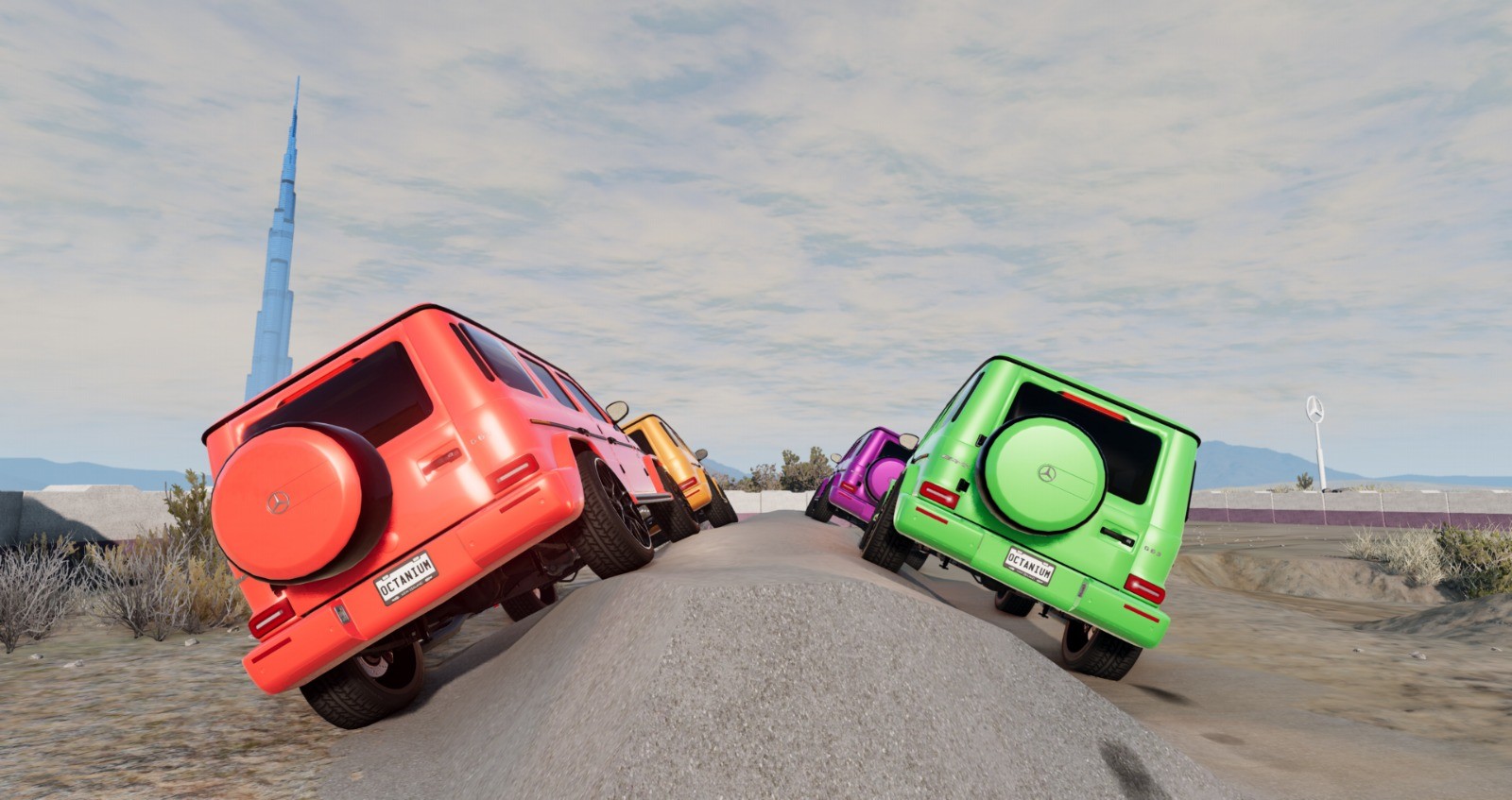
Axle twister.
Axle twister.
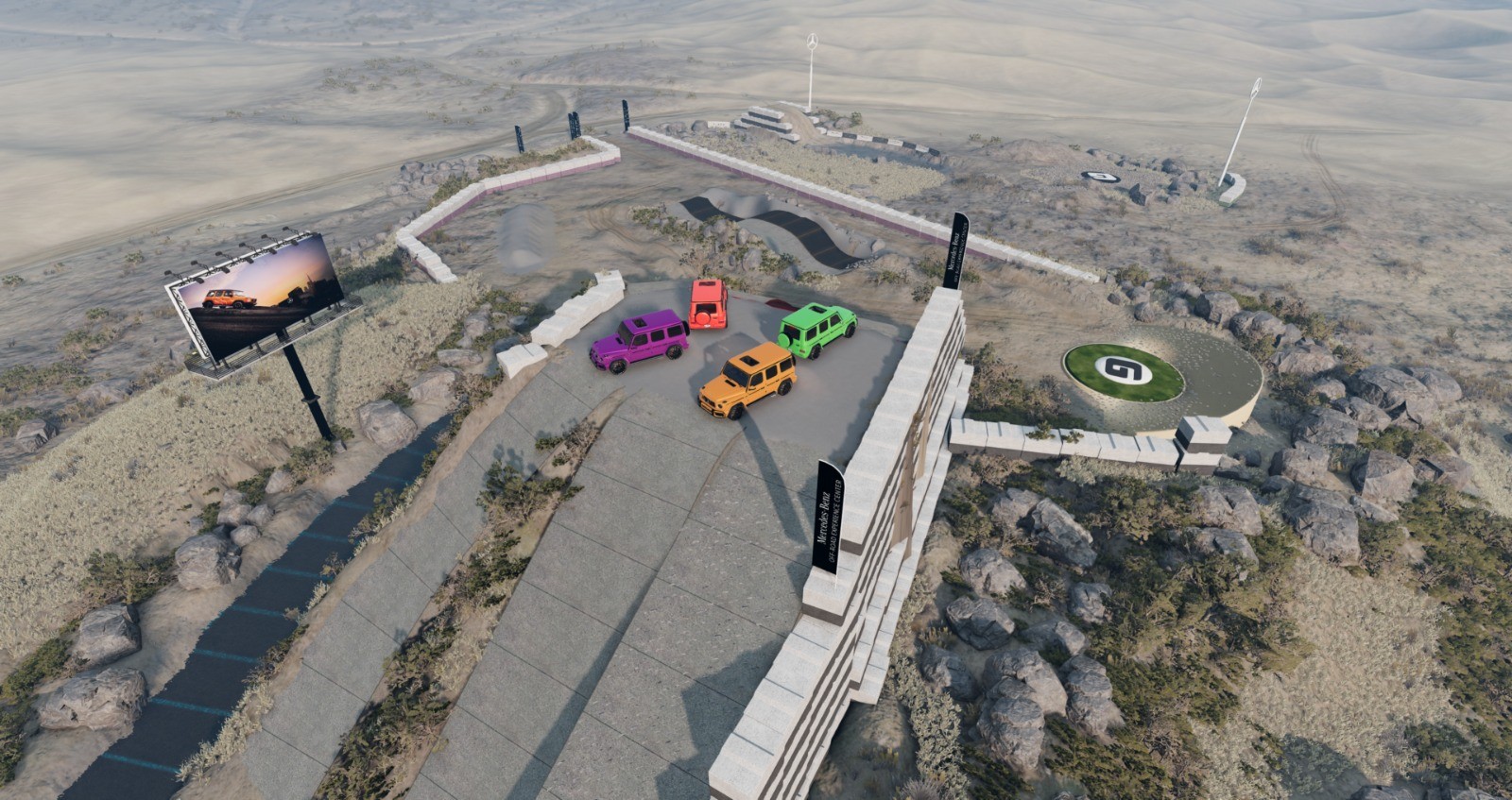
The centre from above.
Into the dunes.
Into the dunes.
Sunset run.
Sunset run.
Towards the skyline.
Cameras

Cockpit, chase and drone

Players switch between the driver’s seat, a chase camera and an overhead view, the way they would watch a real run from the viewing deck.

Delivery

PC, headset, and four players at once

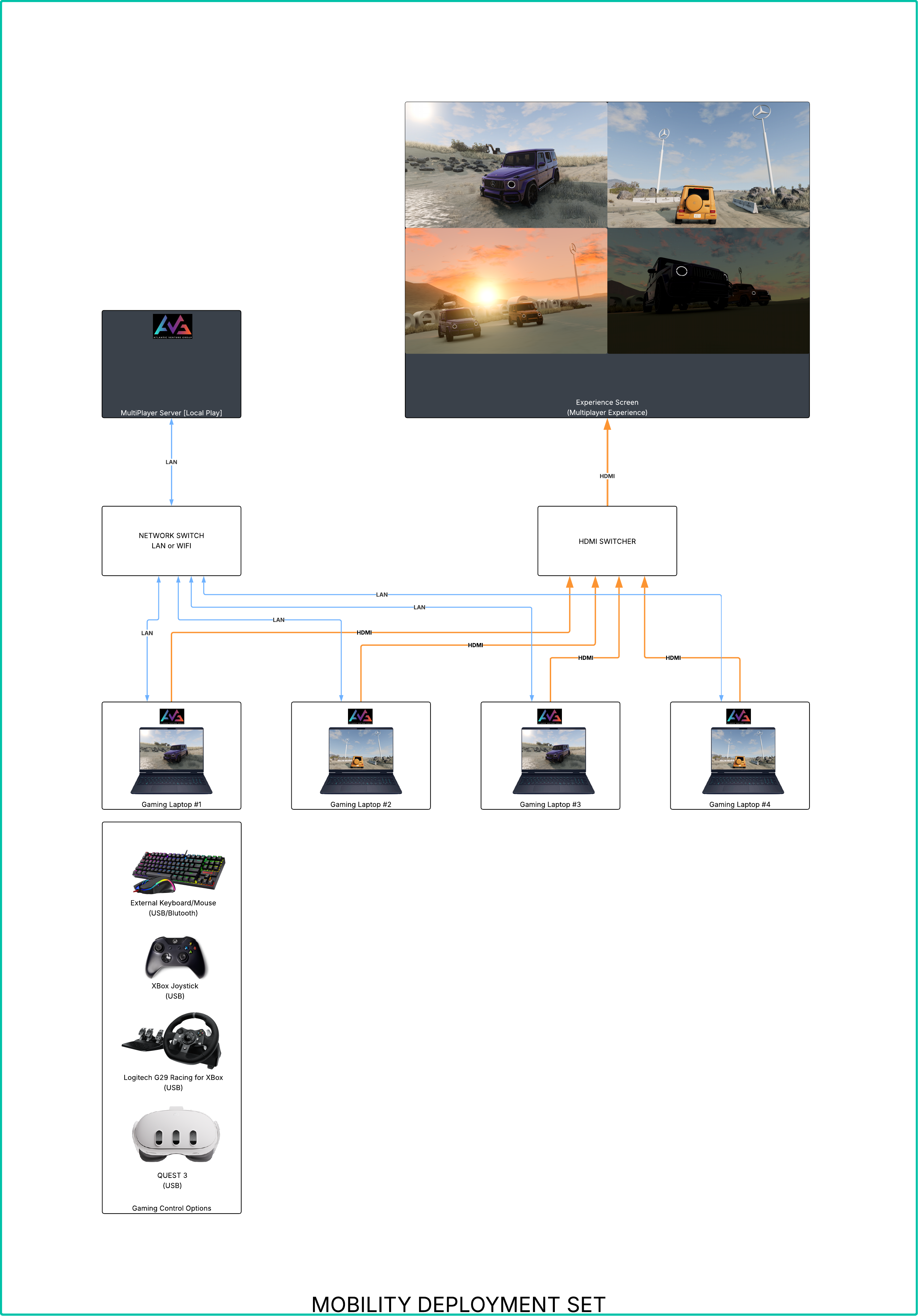
Three ways to play. On a gaming PC with a large GPU, with a keyboard, a controller or a racing wheel and pedals. In a Meta Quest 3, sitting in the driver’s seat. And as a mobile multiplayer set: four gaming stations on a local network with their own multiplayer server, all switched onto one experience screen, so four people race the same course side by side in front of an audience.

Mobility deployment set: four gaming stations, multiplayer server and the shared experience screen
The mobility deployment set. Click to enlarge.
The split screen on site: four drivers, one shared screen.
Back to 3D

Same workflow, new tools

I started in 3D in the 1990s, on 3D Studio for MS-DOS. At Fibrenetix, between 2019 and 2024, I produced the company’s video content and decided to start 3D all over again, this time in Blender. The workflow was the same; the tools were not. That restart is what made this project possible: a game vehicle, a real-time world and a headset build are a different craft from a rendered walkthrough.

The Fibrenetix films are in the video portfolio on my Work page.

Credits

Atlantic Venture Group for the operator of the Mercedes-Benz Off-Road Experience Center, Dubai, 2025.
360° capture, 3D, vehicle, game build and deployment: Stéphane Jacob.