
Accor
1999–2006: more than 750 Accor hotels in 360°, a platform that stitched more than 90,000 images, and the sales CD-ROMs that followed.
In 1999 Accor asked my young studio to put a few of its Paris hotels online in 360°. I shot those first hotels myself, as a proof of concept. By 2006 Doo Interactive had captured more than 750 Accor hotels in at least nineteen countries, and our platform had received, stitched and served more than 90,000 images.
It was a massive project for us, and the one that really put Doo Interactive on the map. The pictures were never the hard part. In 1999, 360° photography was still a craft: one photographer, one site, hours of stitching at a workstation. Accor needed it hundreds of times, on several continents, with photographers I would never meet, and the same quality everywhere. I had to build, from scratch, the workflow that took us from artisanal to mass production.
hotels captured for Accor
images uploaded and stitched
countries, 1999–2006
A handful of Paris hotels
The first order, in June 1999, was three 360° views of one Paris hotel, with its logo, links, background sound and automatic rotation, delivered by FTP. Then a dozen more: Sofitel Arc de Triomphe, Scribe, Le Faubourg, Trocadéro, Bercy and Forum; Novotel Saclay and Les Halles; Ibis Évry; Etap Hotel and Formule 1 in Saint-Ouen; Suitehotel Lille. All published in Java, so a guest could turn around inside a lobby or a room in the browser without installing anything.
In 2000 most guests were still on a dial-up modem and a hotel website showed one or two small photos. Our May 2000 demo for Accor showed the same view at several sizes, because loading time mattered as much as quality. Alongside it came a tender for 286 hotels across four brands, Coralia, Sofitel, Novotel and Mercure, in Europe, the Americas, Asia, Africa and Australia.
From one camera to a network
No single photographer could cover that. After my first hotels, Fred took on shoots too, and then we recruited and trained photographers around the world. Accor’s e-commerce and internet team in Paris sent us hotels by country and by brand: Morocco, London, Sofitels across the United States, Montréal, Shanghai, Cusco, the Novotels of Canada and New York, Mercure hotels in Italy, Dorint Sofitels in Germany, the Netherlands, Austria and the Balearics. For Asia we turned the existing views into CD-ROM content for hotels from Cambodia and Vietnam to Japan and Indonesia.
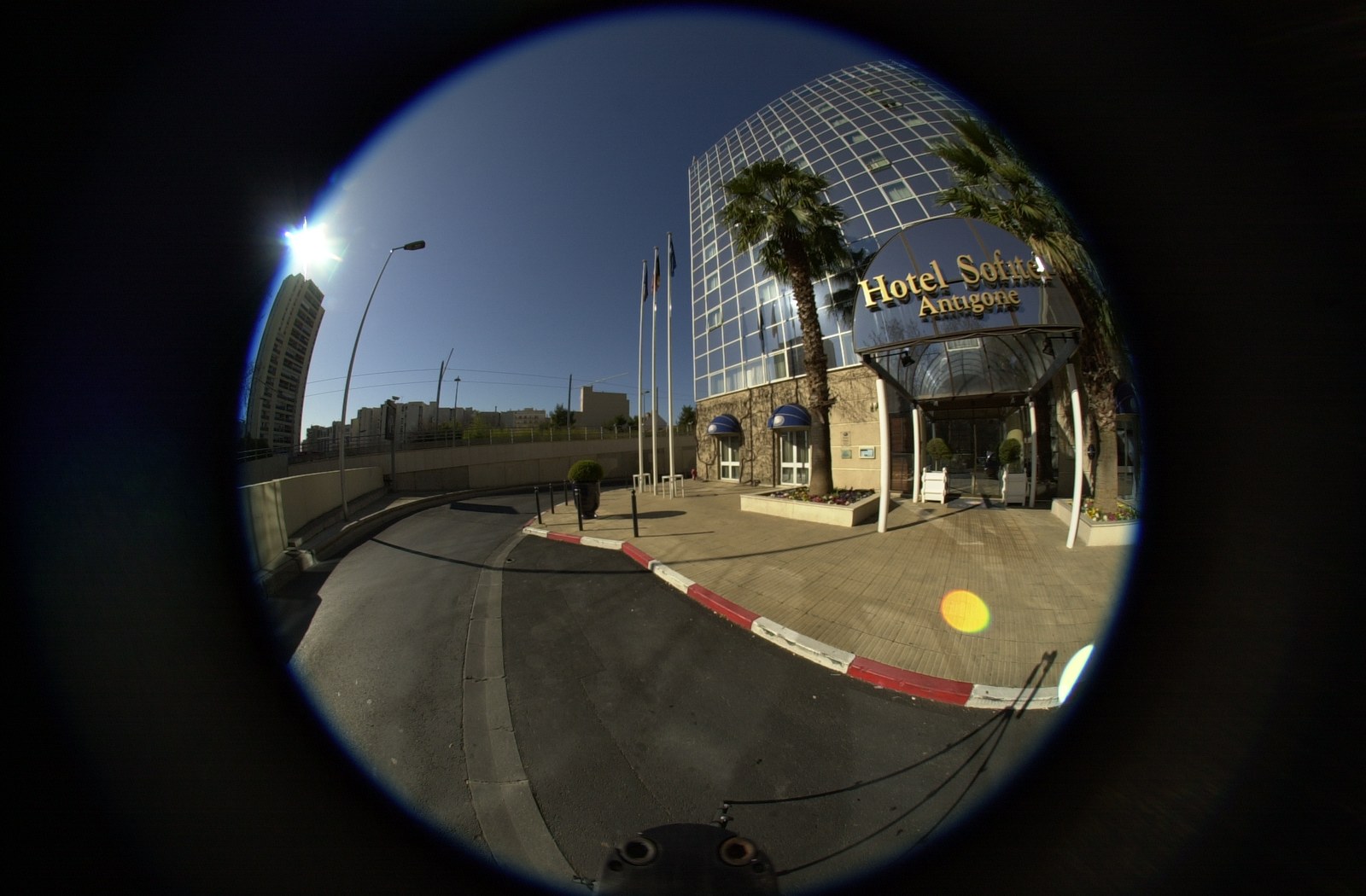
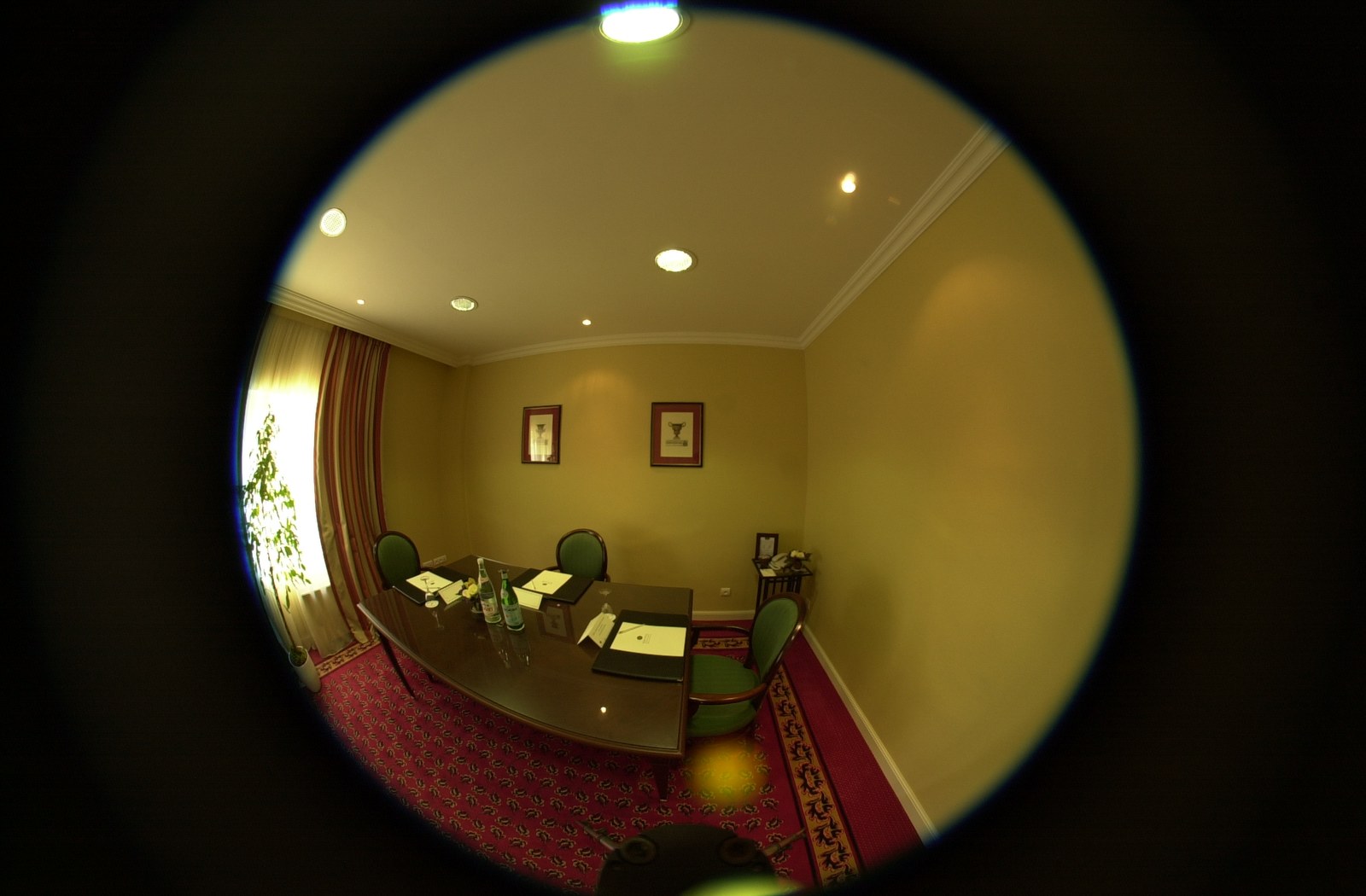
We were already fully digital. Our photographers shot with a Nikon D1 and a fisheye lens, or a Nikon Coolpix 950 with an optical fisheye adaptor, two shots back to back for every view.
The same picture, anywhere
We had designed our shooting protocol for EDF and CEA nuclear sites, where nothing can be left to chance, and applied it to hotels:
- Every view shot at the same height, 170 cm from the floor to the camera.
- Before each viewpoint, a photo of a small slate with its name, so nothing gets mixed up later.
- A white tripod top with a line down the middle, so every sphere could be oriented the same way.
- Viewpoints chosen for the foreground first, then even light, then sensible links from one view to the next.
- Images checked on site before leaving, and every shoot filed under the hotel’s Accor code.
- And one rule that mattered more than the others: each hotel was meant to get at least five views, but our photographers shot at least twenty locations.
Every shot was also bracketed: the same view taken at several exposures, so that the bright daylight from windows and terraces could be blended into dark interiors instead of burning out. It was brand new at the time. iPIX had bought Rimfire, which was doing the same kind of work for real-estate pictures in the United States, and I thought we had to have our own process.
From artisanal to mass production
I designed and built an online platform to hold the whole thing together. Photographers uploaded their raw fisheye sources; the platform stitched them automatically into proof panoramas, online within a day or two; and Accor’s marketing team screened them and chose the pictures they wanted for each hotel. Only then did we produce the final views, with links and logo, in every format the group needed. We also hosted and maintained that database of Accor shoots.
None of it existed off the shelf. There was no cloud to rent capacity from and no GPU to speed up the stitching. The upload, the automatic stitching, the online selection and the hosting all had to be designed and built from scratch, and they had to keep running day after day as shoots arrived from all over the world.
Those twenty locations per hotel were the quiet trick. Faced with twenty good views instead of five, Accor’s marketing team was always tempted to take more. The upsell happened on the screen, at the moment of choice, with no salesperson in the room.
By the end, more than 90,000 images had gone through the platform. In 2003 Sofitel’s internet team could tell its hotels that each of them had, or would have, a 360° virtual tour on its page on sofitel.com and accorhotels.com, and named Doo Interactive, as iPIX France, Accor’s supplier for 360° tours.
From pictures to sales tools
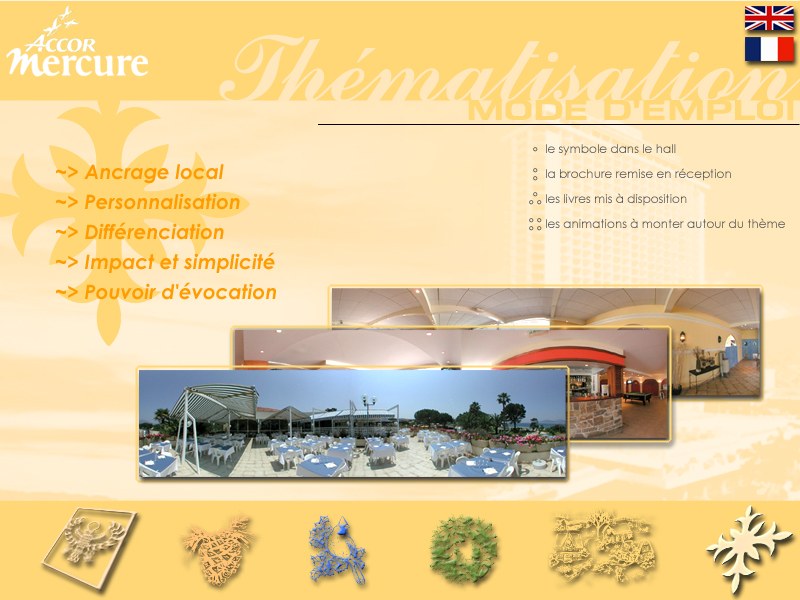
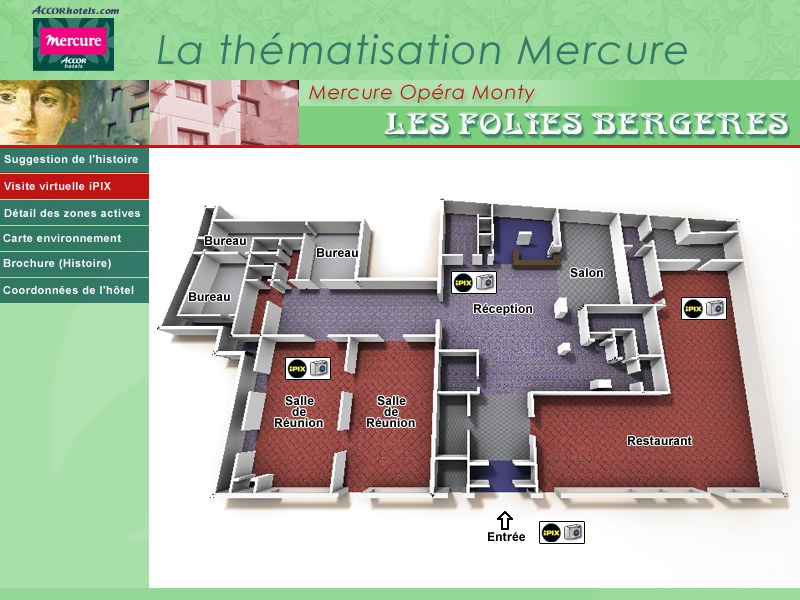
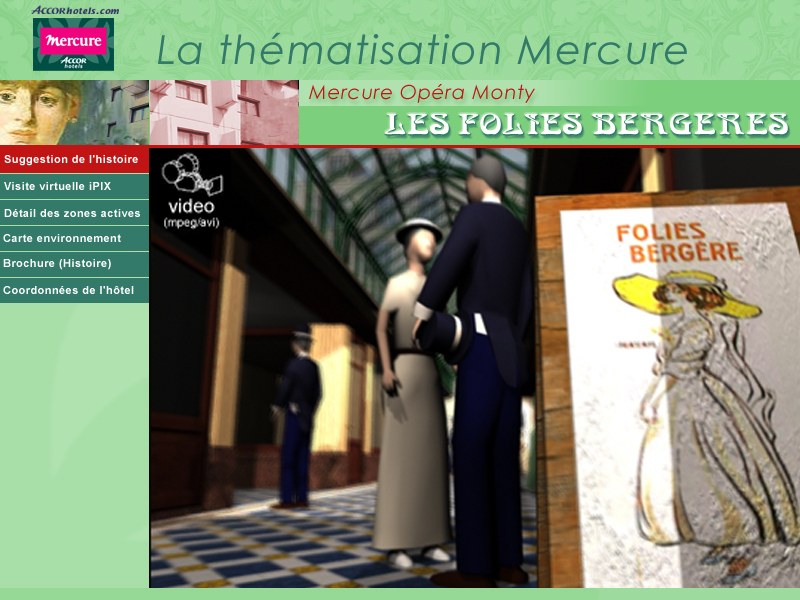
The CD-ROMs came after, because we could reuse that image base with everything we knew about Macromedia Director. In 2002 we produced La Thématisation Mercure, an internal CD-ROM in French, English and German showing other hotel teams how three Mercure hotels had built a theme around their town: hosiery in Troyes, the Folies Bergère at the Opéra Monty, the painters of Montmartre, in 360° with clickable details.
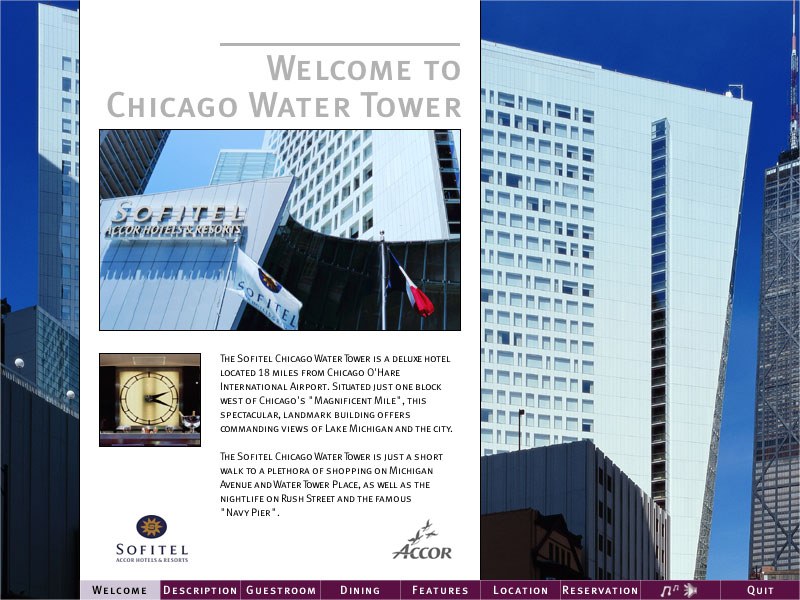
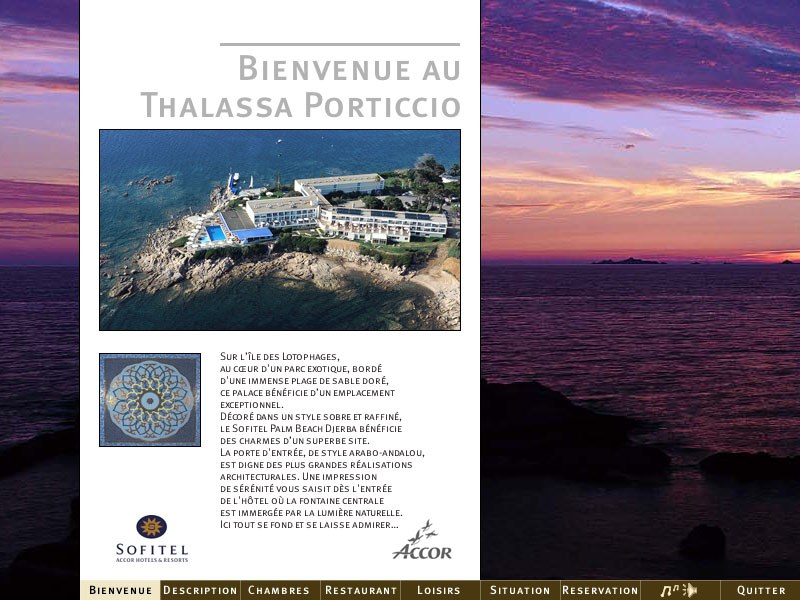
Then Sofitel offered every one of its hotels a presentation CD-ROM built on its virtual tour, so that sales teams could get to know a hotel before selling it. We industrialised it: the same headings for every hotel, welcome, description, rooms, dining, features, location and reservations, around full-screen 360° views. Sofitel Chicago Water Tower was the model, followed by Thalassa Porticcio, Atrium Budapest, Mercure Paris Tour Eiffel Suffren and six Novotels in Montréal, New York, Ottawa and Toronto. At the time it was a revolution: a salesperson could walk a client through a hotel on the other side of the world from a laptop.
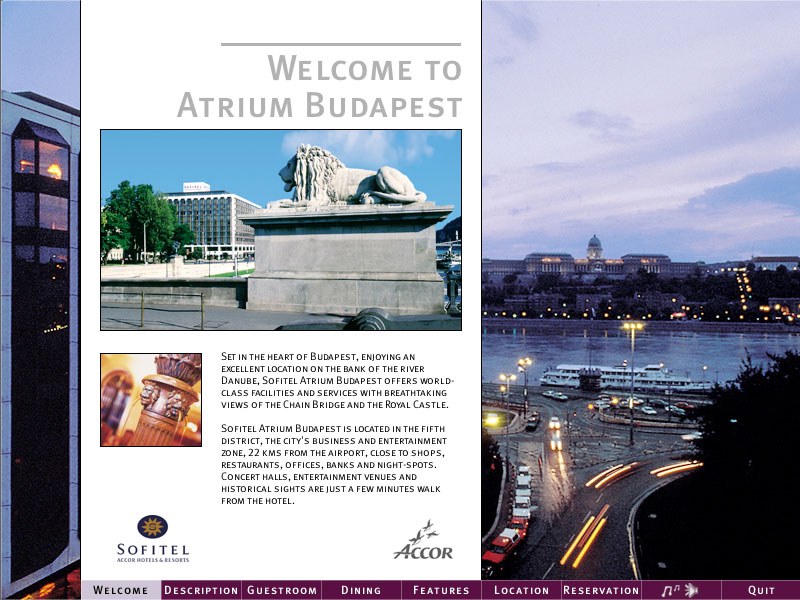
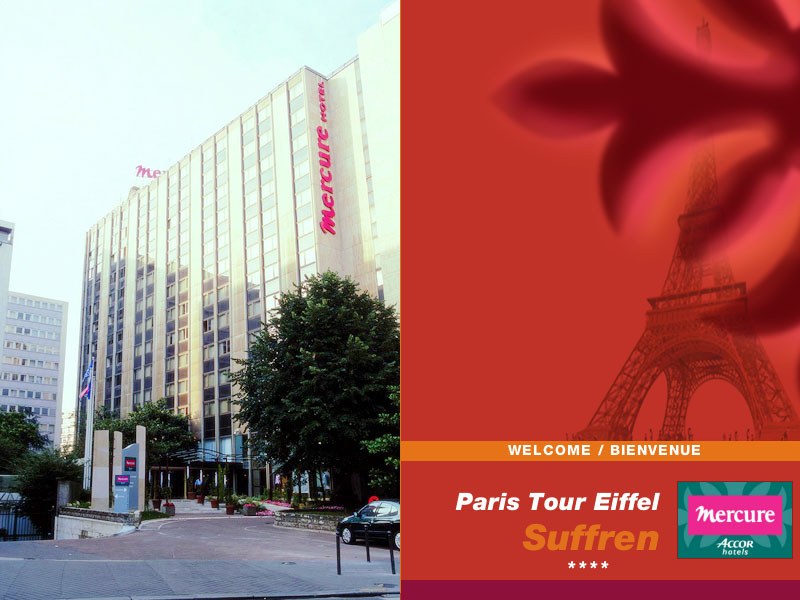
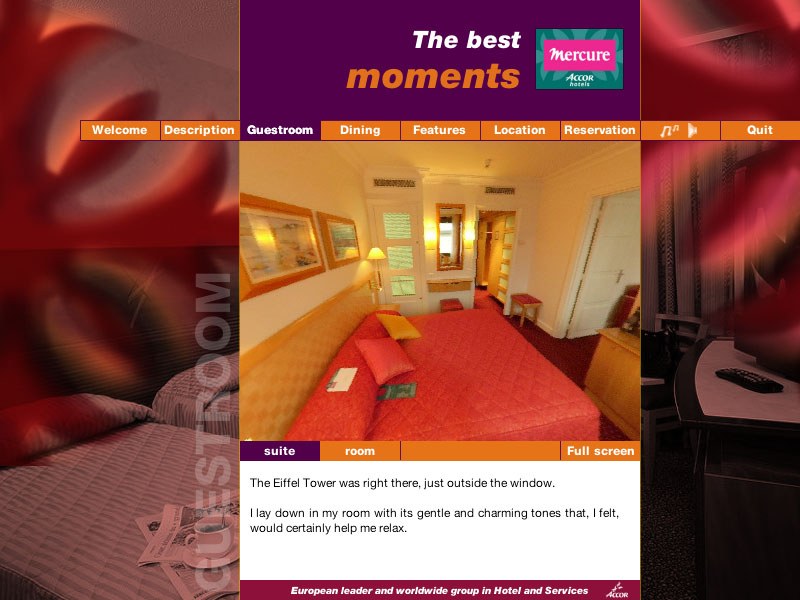
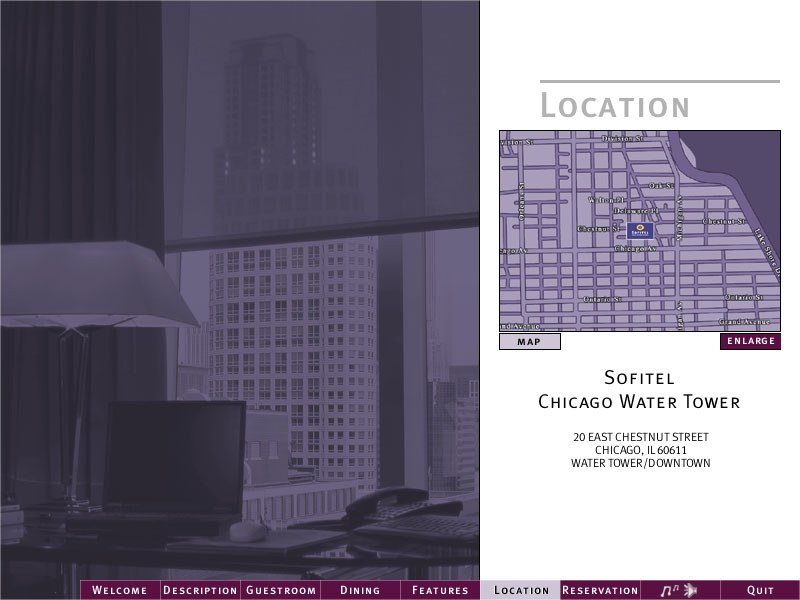
The hotels in 360°
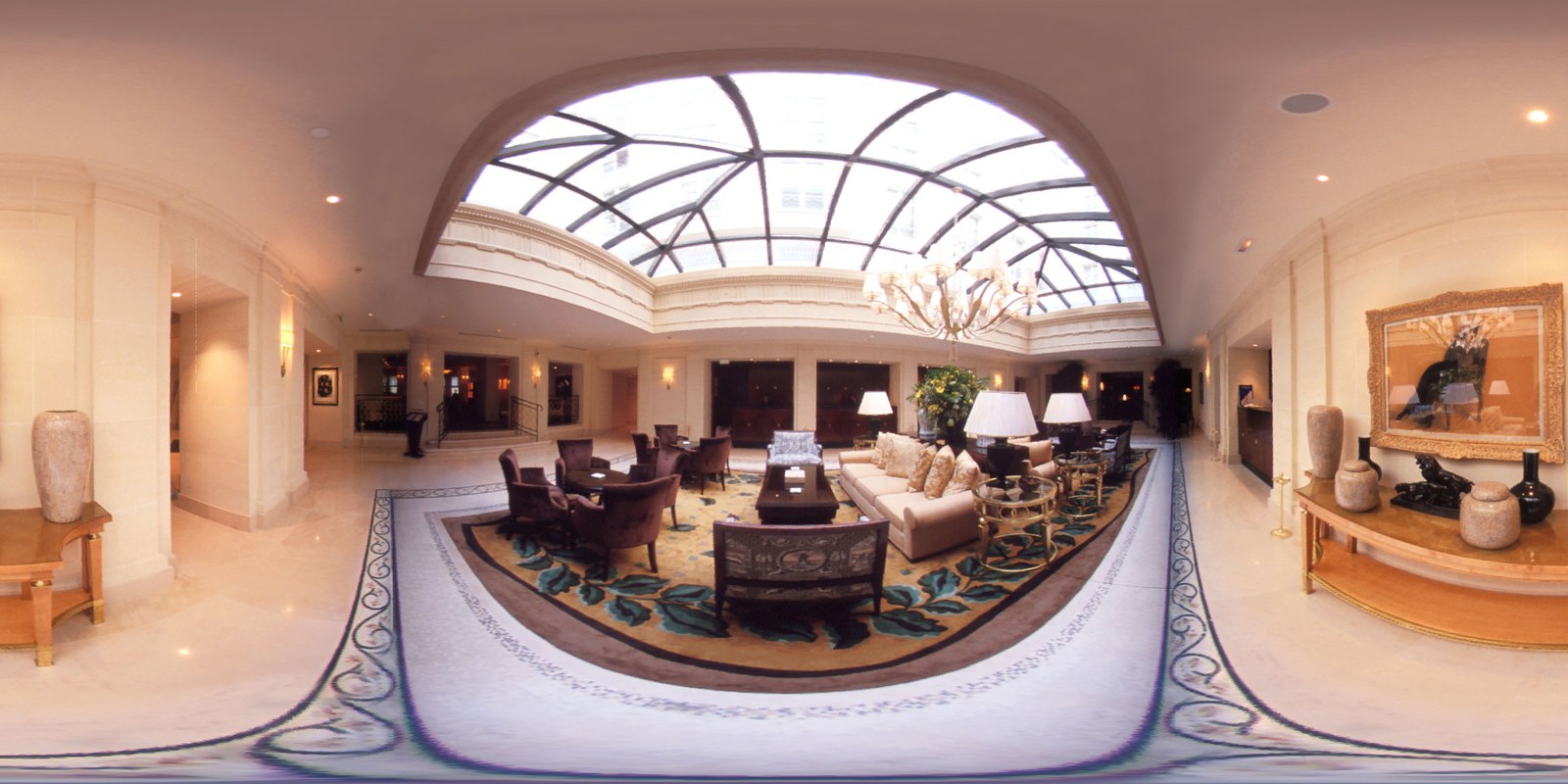
Twenty views from the hotel CD-ROMs and our archive, from a Mercure room facing the Eiffel Tower to the thalassotherapy pool in Porticcio. Most shipped as protected iPIX files; I decoded them in 2026 and converted them into standard panoramas. Drag to look around.
What changed, and what did not
Today 360° views are common on hotel and booking sites, and a phone can shoot one in a second. In 1999 a hotel website had one or two photos, and a 360° view meant a fisheye lens, a stitching workstation and a patient modem. Today a programme like this would run on cloud storage and GPU processing; we did it with neither.
What has not changed is the lesson of Accor: at scale, the method is the product. A standard every photographer can follow, a pipeline that never loses a file, and a moment where the client chooses.
Produced by Doo Interactive for Accor, 1999–2006.
Workflow, production and interactive design: Stéphane Jacob, with the Doo Interactive team of video editors and multimedia producers.
Photography: Stéphane Jacob (first hotels), Frédéric Swierczynski and Doo Interactive’s network of photographers worldwide.
Sources: Doo Interactive project files and Accor correspondence, 1999–2005.